Science and Technology for a more Inclusive
and Sustainable Global Community
Global Center for Development and Strategy
-
Press [Opinion] Pendulum (Korea JoongAng Daily, 2026.10.06.)
Watching the pendulum of a wall clock brings a curious sense of reassurance. Perhaps it comes from the belief that however far it swings, it will eventually return to the center. A pendulum’s motion is an honest exchange of potential and kinetic energy. It descends carrying all the energy stored as it rises, then climbs just as high on the opposite side. In 1583, at Pisa Cathedral, 19-year-old Galileo is said to have measured the period of a swinging ceiling lamp against his pulse. Whether the swing was wide or narrow, each round trip seemed to take the same time. This is the isochronism of the pendulum, which later became the basis of the pendulum clock. But there is a condition. It holds only when the angle of motion is small. As the amplitude increases, the period grows longer. In a pendulum swinging violently, I see our society. The farther it travels toward one side, the farther it swings toward the opposite extreme. Extremism on one side invariably becomes the justification for extremism on the other, making the next swing wider. Recovery takes longer, and all of us hanging from the pendulum pay the price. There is also a critical point that must not be crossed. Once the pendulum goes over the top, it loses its balance and spins in one direction. Just as a clock cannot measure time with a pendulum that never returns, a society thrown off its orbit cannot move toward the future. Embedding science and technology in Korea’s Constitution What, then, can reduce a dangerously widening amplitude? Friction. It is the kind of thing we usually find bothersome, like air resistance or stiffness at the pivot. In society, it means tedious dialogue and compromise, principles that withstand discomfort and tolerance of others. Only by enduring that arduous process, and refusing to lose sight of the center even while swinging, can our social clock recover its proper rhythm. I look again at the wall clock. Perhaps what Galileo noticed in the lamp was not the swing but the return. The clock’s hands move forward not because the pendulum surges violently to one side, but because it unfailingly descends and passes through its lowest point. The most powerful force moving the world, too, is not the pull toward opposing extremes, but the steady restoring force that insists on finding the center again. A healthy society does not stop swinging altogether. It keeps moving, but within shared bounds that allow disagreement without destroying the common center. What, then, can reduce a dangerously widening amplitude? Friction. It is the kind of thing we usually find bothersome, like air resistance or stiffness at the pivot. In society, it means tedious dialogue and compromise, principles that withstand discomfort and tolerance of others. Only by enduring that arduous process, and refusing to lose sight of the center even while swinging, can our social clock recover its proper rhythm. I look again at the wall clock. Perhaps what Galileo noticed in the lamp was not the swing but the return. The clock’s hands move forward not because the pendulum surges violently to one side, but because it unfailingly descends and passes through its lowest point. The most powerful force moving the world, too, is not the pull toward opposing extremes, but the steady restoring force that insists on finding the center again. A healthy society does not stop swinging altogether. It keeps moving, but within shared bounds that allow disagreement without destroying the common center. Go to the original article
2026.10.06.
-
Press [News] Seeking Ways to Use AI for Inclusive and Sustainable Development Cooperation (KOREA.net, 2026.09.23.)
- MOFA and KOICA co-hosted the 19th Seoul ODA International Conference in conjunction with the first Korea–Central Asia Summit - [Related National Policy Task] No. 120: Emerging as a G7+ Diplomatic Power through Contributions and Active Engagement in the International Community The Ministry of Foreign Affairs (MOFA) and the Korea International Cooperation Agency (KOICA) jointly hosted the 19th Seoul ODA (Official Development Assistance)* International Conference at the Conrad Seoul Hotel in Yeouido on September 18 (Friday). The Seoul ODA International Conference is Korea's largest annual conference on ODA. This year's conference, themed "Artificial Intelligence (AI) for Inclusive and Sustainable Development," brought together representatives from the development cooperation community including governments, international organizations, academia and industry at home and abroad. * Official Development Assistance (ODA) is aid provided by government and other public institutions for developing countries to help them promote economic development and social welfare. Participants agreed that fully realizing diverse opportunities AI brings to development cooperation requires careful consideration of each country's differing digital infrastructure as well as its human and institutional conditions. Their discussions focused on how to tailor the use of AI to the circumstances and needs of partner countries and ensure that technology gaps do not cause wider inequality. In her welcoming remarks, Vice Minister of Foreign Affairs Kim Jina said that while AI is creating new opportunities for productivity, innovation and development, existing gaps could widen further if its benefits are not shared broadly. She stressed that the task of development cooperation is not simply to expand access to technology but to help each partner country build the capacity and sense of ownership needed to use and advance AI in line with its own circumstances. She added that Korea would continue to work as a responsible partner so that “no one is left behind in the age of AI." In his opening remarks, KOICA Acting President Kim Dong-ho said the conference would serve as an opportunity to move beyond conceptual discussions of development cooperation in the AI era and for businesses, civil society and partner-country governments to jointly explore concrete courses of action. In his keynote address, Dr. Landry Signé, Senior Fellow at the Brookings Institution, argued that developing countries should become co-creators of the AI transition rather than mere consumers of technology, and called for an inclusive AI governance and new partnerships to make this possible. The first session on "Designing Development Cooperation in the AI Era" examined the foundations and principles needed to advance AI-related development cooperation. Director-General for Development Cooperation at MOFA Lee Kyooho introduced the Korean government's strategy for grant assistance related AI and science and technology, while head at the International Telecommunication Union (ITU) Hani Eskandar and KAIST Professor Park Kyung Ryul, who studies sustainable development and global technology governance, shared perspectives on building AI infrastructure and on inclusive AI governance, respectively. Participants noted that, in the AI era, it is important to expand not only internet connectivity but also cloud computing, data and digital public infrastructure, alongside talent development. They also stressed the need to design AI with attention to partner countries' own languages, data and institutions, and to ensure that partner countries take part from the design stage onward as capable participants rather than remaining mere beneficiaries. The second session on "AI Development Cooperation in the Field" showcased real-world examples of AI applications in development cooperation. 60Hertz, a company participating in KOICA's corporate partnership program, presented its use of IT solutions and virtual power plant (VPP) technology to expand the distribution of renewable energy in Vietnam. Wadhwani AI introduced its mobile AI applications in India's healthcare sector, and Norway's development cooperation agency, Norad, shared its experience of using AI to automate aid administration and support data-driven decision-making. The third session was organized as a special session to deepen AI-related ODA cooperation with five Central Asian countries, building on the outcomes of the first Korea–Central Asia Summit held on September 16. Under the theme "A Strategic Partnership for Korea–Central Asia AI ODA," officials from KOICA, the World Bank, the Asian Development Bank (ADB) and the government of Tajikistan shared the progress in AI and digital cooperation under way in Central Asia, while government representatives from Uzbekistan, Kyrgyzstan, Tajikistan, Kazakhstan and Turkmenistan exchanged views on future cooperation in a panel discussion. Participants emphasized that, given the differing levels of digital development, infrastructure and human resources across Central Asian countries, cooperation should reflect each country's own strategy and needs rather than pursue uniform technology transfer. They also identified AI talent development, expanded computing infrastructure, and the development of technologies based on local languages as key areas for future cooperation. MOFA and KOICA plan to actively incorporate the outcome of the discussions held at this conference into their future Korea–Central Asia AI ODA initiatives. As a side event, a "KOICA AI Partners Fair" was held, featuring ten Korean AI companies* that presented AI and digital technologies spanning education, healthcare, energy, agriculture and other fields. The fair gave Korean companies an opportunity to explore entry into the development cooperation market and to network with overseas partners.* DataMaker, TagHive, weplat, AIWorks, Visang Education, 60Hertz, LiveCare, Medisapiens, Pipetree, AIMD Amid growing calls for international cooperation to narrow the AI gap between nations and to harness AI for the sustainable development of developing countries during this period of digital and AI transformation, MOFA designated AI as a priority ODA area and established its "Grant-based AI ODA Strategy" in July of this year. Building on the results of the discussions held at this conference, MOFA and KOICA plan to continue advancing inclusive and sustainable AI development cooperation together. Go to the original article
2026.09.23.
-
Notice [Center Overview] G-CODEs at a Glance: Key Research and Activities
2026.09.29.
-
Notice [Research Achievement] G-CODEs Selected for a New NRF Global Humanities and Social Sciences Convergence Research Project
KAIST Global Center for Development and Strategy (G-CODEs) has been selected as a partner institution for a new research project under the National Research Foundation of Korea’s Global Humanities and Social Sciences Convergence Research Program. Led by the Sogang University Institute for Social Sciences, the research consortium also includes G-CODEs, the Institute of Economic Research at Seoul National University, and the Institute for Democratic Society and Policy at Hanshin University. The consortium will receive a total of KRW 9 billion in research funding over five years, of which approximately KRW 2 billion will be allocated to G-CODEs. The research team will conduct a comprehensive analysis of changes in industry, labor, demographics, and social policy arising from the AI transition. Based on its findings, the team aims to develop a model for a fair and inclusive AI transition. Through this project, G-CODEs will lead research on the integrated redesign of industrial and technology policies and their contribution to global development, while exploring sustainable and inclusive policy directions for the era of AI transformation. • Project Title: Building a Fair State in the Era of AI Transformation: An Integrated Redesign of Industrial, Labor, Demographic, and Social Policies • Research Period: September 2026–August 2031 • Lead Institution: Institute for Social Sciences, Sogang University • Partner Institutions: KAIST Global Center for Development and Strategy (G-CODEs); Institute of Economic Research, Seoul National University; Academy of Democratic Society and Policy, Hanshin University
2026.09.08.
-
G-Talks [G-CODEs Talks] From Food Aid to Self Reliance: How Zero Hunger Villages Are Transforming Climate-Vulnerable Communities in Malawi
■ Date and Time: July 9, 2026 (Thu), 14:00–15:40 ■ Venue: Yang Seungtaik Auditorium, KAIST Academic Cultural Complex (E9) ■ Speaker: Hyoung Joon Lim, WFP Malawi Country Director and Representative ■ Title: From Food Aid to Self-Reliance: How Zero Hunger Villages Are Transforming Climate-Vulnerable Communities in Malawi ■ Panelists • Hae Won C. McJeon, Professor, KAIST Graduate School of Green Growth and Sustainability • Hyungjun Kim, Professor, KAIST College of AI • Hyunyoung Ryu, Professor, KAIST MetaEarth Research Center ■ Key Presentation and Discussion Highlights: Hyoung Joon Lim, Country Director and Representative of the United Nations World Food Programme (WFP) in Malawi, introduced the realities facing rural communities in Africa, where climate change is intensifying food insecurity. He shared the experience and achievements of the Zero Hunger Village model, which seeks to move beyond repeated emergency food assistance by enabling communities to produce their own food and generate sustainable sources of income. In Guinea, the programme went beyond introducing high-yield rice varieties and agricultural technologies by linking agricultural production with school meals, nutrition support, rural infrastructure, market access, and income diversification. This integrated approach created a virtuous cycle in which increased agricultural productivity contributed to higher household incomes and improvements in children’s nutrition and education. In Malawi, WFP is similarly combining climate information and anticipatory action with agricultural inputs, technical guidance, soil and water management, finance, and market access to support the transition of residents from food-aid recipients to self-reliant producers and economic actors. The presentation highlighted that food insecurity should not be understood simply as a shortage of food or a problem of low agricultural productivity. In contexts where climate shocks such as droughts and floods recur, providing emergency relief to the same communities each year remains essential for protecting lives. Over the long term, however, this approach may place increasing pressure on governments and donors while weakening the foundations for community self-reliance. The presentation therefore emphasized the need to shift the focus of development cooperation from “how much assistance has been delivered” to “when communities can graduate from assistance.” This requires a phased pathway from increased productivity and household food security to surplus production, income generation, market participation, and ultimately self-reliance. Gradually reducing external assistance while increasing community contributions and ownership was presented as a key condition for reducing aid dependency and improving both the sustainability and scalability of development programmes. The subsequent discussion focused on how technology, field implementation, institutions, and local communities could be better connected to scale the achievements of the Zero Hunger Village model. The panelists emphasized that in climate-vulnerable countries such as Malawi, the impacts of climate change extend beyond declining agricultural production and can trigger cascading consequences for educational opportunities, household livelihoods, nutrition and health, migration, and social protection. They therefore underscored the importance of anticipatory governance, which uses early-warning systems and precise climate information to provide timely support to the communities and populations most at risk, rather than responding only after a climate crisis has occurred. The discussion also explored opportunities for research institutions such as KAIST to provide climate and environmental data and predictive technologies, while international organizations and field-based partners apply these tools to operational decision-making and programme implementation. The panelists further noted that technologies and external solutions should not be transferred in a one-directional manner. Instead, communities must be able to participate directly in programme implementation and experience tangible results. When residents contribute their own labour and resources, observe the success of neighbouring households, and take part in village-level decision-making, motivation and cooperation can spread and contribute to greater community resilience. The discussion also emphasized the need for complementary collaboration between researchers, who can objectively assess programme outcomes, and field practitioners, who can identify practical challenges that may be overlooked in academic research. Director Lim explained that WFP is expanding its cooperation with universities and research institutions and that field data-based research, programme evaluation, and the participation of students and researchers in field activities could help assess the effectiveness and scalability of the Zero Hunger Village model. Ultimately, the presentation and discussion demonstrated that food-security challenges in climate-vulnerable regions cannot be addressed by treating emergency relief and long-term development, climate adaptation and local economic development, or science and technology and community participation as separate agendas. The Zero Hunger Village model is not intended to perpetuate external assistance, but to build the capacity of communities to withstand shocks and secure their own food and income. A central takeaway was that scaling these achievements into national policy will require the financial and institutional participation of local governments, as well as long-term cooperation among international organizations, universities, and the private sector. ■ Speaker Biography: • Hyoung Joon Lim has worked with the United Nations World Food Programme (WFP) for over 20 years, leading humanitarian and development operations across four continents. • He has served in Honduras, Guinea-Bissau, Laos, WFP Headquarters in Rome, and the WFP Seoul Global Office. • From 2021 to 2025, he served as WFP Country Director in Guinea, where he launched the Zero Hunger Village programme and contributed to laying the foundation for the K-Rice Belt initiative. • He currently serves as WFP Malawi Country Director and Representative.
2026.07.09.
-
Events
 [G-CODEs] World Bank Group Campus Presentation for KAIST Students
● Date and Time: Friday, July 3, 2026, 1:00–2:00 p.m. ● Venue: Yang Seung-Taik Auditorium, 2nd Floor, Academic Cultural Complex (E9), KAIST Main Campus ● Hosted by: KAIST Global Center for Development and Strategy (G-CODEs), KAIST Office of International Relations, and the World Bank Group On July 3, the KAIST Global Center for Development and Strategy (G-CODEs), in collaboration with the KAIST Office of International Relations and the World Bank Group, hosted the World Bank Group Campus Presentation, a global internship and career information session for KAIST students. The event was organized to introduce students interested in international development and global public policy to the role and key activities of the World Bank Group, while providing practical information on internships and a range of career and recruitment opportunities. The World Bank Group is a leading international organization that supports poverty reduction and sustainable development in developing countries through financing, policy advice, knowledge sharing, and technical cooperation. During the presentation, students learned about the World Bank Group’s organizational structure and major areas of work, as well as how they could apply their academic backgrounds and professional expertise to international development. The session also introduced various pathways for joining the World Bank Group. The institution offers opportunities tailored to different stages of academic and professional development, including internships, early-career programs, consultancy positions, and staff appointments for current students, recent graduates, early-career professionals, and experienced specialists. Particular attention was given to the WBG Pioneers Internship Program, which is designed for current students. The program is open to undergraduate students in their final year and students currently pursuing master’s or doctoral degrees. Selected interns participate in full-time assignments lasting from one to six months and gain practical experience through direct involvement in the World Bank Group’s work. The program also provides corporate and operational training, weekly guest-speaker sessions, and performance feedback to support participants’ professional development. Other career pathways presented during the session included the Young Professionals Program (YPP), one of the World Bank Group’s flagship early-career programs; Extended Term Consultancy (ETC) opportunities for professionals with relevant work experience; and staff positions across a range of specialized fields. Participating students learned about the eligibility requirements, application schedules, areas of work, and preparation processes for each program, gaining a clearer understanding of career opportunities within the World Bank Group. Through the presentation, KAIST students gained practical information about the World Bank Group’s internship and recruitment programs and explored potential career paths in international organizations and the global development sector. G-CODEs is committed to nurturing future professionals who can connect science and technology with international development. The Center continues to expand educational and exchange opportunities that support students seeking careers in international organizations and global policy. G-CODEs will continue working with the World Bank Group and other domestic and international partners to develop programs that support the growth of the next generation of global talent.
2026.07.03.
-
Events
 [G-CODEs] Forum on Global Cooperation in Science and Technology: Beyond Crisis, Toward Sustainable Cooperation
• Date and Time: June 10, 2026 (Wednesday), 1:00–6:00 p.m. • Venue: Yang Seung-Taik Auditorium, KAIST Academic Cultural Complex (E9), Daejeon • Hosted by: KAIST Global Center for Development and Strategy (G-CODEs) The KAIST Global Center for Development and Strategy (G-CODEs) hosted the “Forum on Global Cooperation in Science and Technology: Beyond Crisis, Toward Sustainable Cooperation” at the Yang Seung-Taik Auditorium in the KAIST Academic Cultural Complex on June 10, 2026. The forum was organized to review South Korea’s international cooperation strategies and execution capabilities and to explore sustainable approaches to cooperation amid a rapidly changing environment for international cooperation in science and technology, driven by intensifying competition for technological hegemony, the restructuring of global supply chains, and rising uncertainty in energy security. The event was held as a follow-up to last year’s “Forum on Global Cooperation in Science and Technology: Reflections and Prospects.” Building on discussions concerning the direction and principles of international cooperation in science and technology, this year’s forum focused on more concrete challenges arising in the field, including research security, international joint research, institutional foundations, and the development of professional talent. The forum opened with welcoming remarks by Kwang Hyung Lee, President of KAIST, congratulatory remarks by Sangwook Kang, Director General for Planning and Coordination at the Ministry of Science and ICT, and opening remarks by Myung Ja Kim, Chairperson of the KAIST Board of Trustees. A wide range of discussions subsequently took place across three sessions. The first session, “Restructuring Science and Technology International Cooperation in the Era of Techno-Geopolitics,” was chaired by So Young Kim, Vice President of International Office at KAIST. The session examined how competition for technological hegemony, economic security, and the restructuring of global supply chains are reshaping international cooperation in science and technology. Wonho Yeon, Director at Hyundai Motor Group Global Policy Office (GPO), discussed strategic cooperation in the era of economic security; Eunkyu Cho, Head of Team at the Korea Institute for Industrial Economics & Trade (KIET), presented opportunities for Korea–China cooperation in the field of physical AI; and Inkyoung Sun, Research Fellow at the Science and Technology Policy Institute (STEPI), addressed international research cooperation and research security policy. Damian Bank, Professor at G-CODEs, and Chaegwon Lim, Professor at the School of Electrical Engineering at KAIST, joined the panel discussion to explore cooperation strategies that balance openness with the protection of critical technologies. The second session, “International Joint Research: Issues and Challenges,” was chaired by Jae Yong Choung, Professor at the Graduate School of Science and Technology Policy at KAIST. The session addressed practical experiences and institutional challenges associated with international joint research. Eunseong Kim, Dean of the Graduate School of Quantum Science and Technology at KAIST, introduced the conditions required to build sustainable research networks, drawing on the experience of the KAIST–MIT global partnership. Dr. Hae Jung Lee of the National Institute of Standards and Technology (NIST) in the United States shared an overseas partner’s perspective on South Korea’s collaborative capabilities and areas for improvement. Seokkyun Woo, Professor at the Graduate School of Science and Technology Policy at KAIST, analyzed the current status of international joint research conducted by government-funded research institutes and presented policy implications for improving the international cooperation support system. Ju Young Kim, Policy Officer at the Delegation of the European Union to the Republic of Korea, and Hyerin Park, Center Head at the Korea Research Institute of Standards and Science (KRISS), participated in the panel discussion. The third session, “Fostering Talent for Science and Technology International Cooperation,” was chaired by Sukyung Park, Professor at the Department of Mechanical Engineering at KAIST. The session explored the competencies and training systems needed to foster interdisciplinary professionals capable of connecting science and technology with diplomacy, policy, and international cooperation. Eunju Jun, Director at the Korea Atomic Energy Research Institute (KAERI); Mijung Um, Center Head at the Science and Technology Policy Institute (STEPI); Jonghoon Moon, Deputy Director at the Ministry of Science and ICT; Jinyeob Na, Deputy Director at the Ministry of Foreign Affairs; and Eun Jung Koh, Head of Division at the Korea Institute of Human Resources Development in Science and Technology (KIRD), participated as panelists and shared their experiences from research institutes, government agencies, and the field of science diplomacy. Participants emphasized the need to develop interdisciplinary education and systematic career development pathways that enable science and engineering professionals to expand their careers beyond laboratories and contribute to policymaking, international organizations, and science and technology diplomacy. The forum provided a meaningful opportunity for researchers, policymakers, and international cooperation practitioners to jointly assess changes in the global environment and explore practical approaches that connect research, policy, and diplomacy. G-CODEs will continue to strengthen the institutional foundations and execution capabilities of international cooperation in science and technology while advancing research and policy discussions on major issues, including research security, international joint research, and the development of future professionals.
2026.06.11.
-
Events
 [G-CODEs] KAIST G-CODEs Participates in KDI-World Bank Capacity Building Program “Jobs for Youth in Africa: AFE Labor Academy”
• Date: May 26 (Tue) – May 29 (Fri), 2026 • Venue: KDI Global Knowledge Exchange and Development Center (GKEDC) • Organizers: Korea Development Institute (KDI), World Bank • Key Participants: Dong Soo Kang (Executive Director, KDI GKEDC), Jongin Sun (Head of Global Knowledge Cooperation Team, KDI GKEDC), Daniel Dulitzky (Practice Director, WB), Jason Allford (Country Manager in Korea, WB), Loli Arribas-Baños (Practice Manager, WB), Yoonyoung Cho (Senior Economist, WB), Byeong-gi Park (Senior Social Protection Specialist, WB), Joshua Foong (Senior Program Officer, WB), Kyung Ryul Park (Director, G-CODEs), Ji-Soo Sim (Consultant, WB), government officials from eight African countries — Rwanda, South Africa, Botswana, Ethiopia, Malawi, Kenya, Tanzania, and Zambia — and others. KAIST Global Center for Development and Strategy (G-CODEs) participated in the East Africa Labor and Employment Workshop jointly hosted by the Korea Development Institute (KDI) and the World Bank, contributing to discussions on youth employment and the use of digital technologies. The workshop was organized to strengthen the capacity of East and Southern African countries to design policies for youth employment and entrepreneurship, while sharing Korea’s relevant policy experiences and implementation cases. Held over four days, the workshop brought together around 40 participants, including World Bank staff and government officials in the fields of social protection, youth, and employment from eight African countries: Rwanda, South Africa, Botswana, Ethiopia, Malawi, Kenya, Tanzania, and Zambia. Through thematic sessions, site visits, and country action plan development, the workshop provided an opportunity for government officials to share policy experiences, explore regional collaboration, and discuss evidence-based policymaking. Participants also discussed the use of advanced technologies, including artificial intelligence, to address youth employment challenges and improve the delivery of employment services. Since 2025, G-CODEs has continued its collaboration with the World Bank on digital-based youth employment initiatives in East Africa. During the workshop, Professor Kyung Ryul Park, Director of G-CODEs, participated in the Action Plan Presentation Session and joined discussions on employment policy design and the use of technology in participating countries. Professor Yongwook Paik of the KAIST College of Business also delivered a keynote speech on entrepreneurship and innovation strategies in the digital and AI era. Ji-Soo Sim, World Bank Consultant, demonstrated SkillCraft, a digital career assessment solution developed by the World Bank. The demonstration introduced how digital technologies can help young people in developing countries design career pathways based on their skills and interests, and explore opportunities for employment and entrepreneurship. The workshop served as a valuable opportunity to reaffirm the importance of timely policy design for Africa’s youth population, which is expected to play an increasingly significant role in the future global labor market. G-CODEs will continue to strengthen research and policy collaboration with international organizations and African countries to explore how science and technology can contribute to job creation and inclusive growth.
2026.05.29.
-
Notice [Center Overview] G-CODEs at a Glance: Key Research and Activities
2026.09.29.
-
Notice [Research Achievement] G-CODEs Selected for a New NRF Global Humanities and Social Sciences Convergence Research Project
KAIST Global Center for Development and Strategy (G-CODEs) has been selected as a partner institution for a new research project under the National Research Foundation of Korea’s Global Humanities and Social Sciences Convergence Research Program. Led by the Sogang University Institute for Social Sciences, the research consortium also includes G-CODEs, the Institute of Economic Research at Seoul National University, and the Institute for Democratic Society and Policy at Hanshin University. The consortium will receive a total of KRW 9 billion in research funding over five years, of which approximately KRW 2 billion will be allocated to G-CODEs. The research team will conduct a comprehensive analysis of changes in industry, labor, demographics, and social policy arising from the AI transition. Based on its findings, the team aims to develop a model for a fair and inclusive AI transition. Through this project, G-CODEs will lead research on the integrated redesign of industrial and technology policies and their contribution to global development, while exploring sustainable and inclusive policy directions for the era of AI transformation. • Project Title: Building a Fair State in the Era of AI Transformation: An Integrated Redesign of Industrial, Labor, Demographic, and Social Policies • Research Period: September 2026–August 2031 • Lead Institution: Institute for Social Sciences, Sogang University • Partner Institutions: KAIST Global Center for Development and Strategy (G-CODEs); Institute of Economic Research, Seoul National University; Academy of Democratic Society and Policy, Hanshin University
2026.09.08.
-
Press [Opinion] Pendulum (Korea JoongAng Daily, 2026.10.06.)
Watching the pendulum of a wall clock brings a curious sense of reassurance. Perhaps it comes from the belief that however far it swings, it will eventually return to the center. A pendulum’s motion is an honest exchange of potential and kinetic energy. It descends carrying all the energy stored as it rises, then climbs just as high on the opposite side. In 1583, at Pisa Cathedral, 19-year-old Galileo is said to have measured the period of a swinging ceiling lamp against his pulse. Whether the swing was wide or narrow, each round trip seemed to take the same time. This is the isochronism of the pendulum, which later became the basis of the pendulum clock. But there is a condition. It holds only when the angle of motion is small. As the amplitude increases, the period grows longer. In a pendulum swinging violently, I see our society. The farther it travels toward one side, the farther it swings toward the opposite extreme. Extremism on one side invariably becomes the justification for extremism on the other, making the next swing wider. Recovery takes longer, and all of us hanging from the pendulum pay the price. There is also a critical point that must not be crossed. Once the pendulum goes over the top, it loses its balance and spins in one direction. Just as a clock cannot measure time with a pendulum that never returns, a society thrown off its orbit cannot move toward the future. Embedding science and technology in Korea’s Constitution What, then, can reduce a dangerously widening amplitude? Friction. It is the kind of thing we usually find bothersome, like air resistance or stiffness at the pivot. In society, it means tedious dialogue and compromise, principles that withstand discomfort and tolerance of others. Only by enduring that arduous process, and refusing to lose sight of the center even while swinging, can our social clock recover its proper rhythm. I look again at the wall clock. Perhaps what Galileo noticed in the lamp was not the swing but the return. The clock’s hands move forward not because the pendulum surges violently to one side, but because it unfailingly descends and passes through its lowest point. The most powerful force moving the world, too, is not the pull toward opposing extremes, but the steady restoring force that insists on finding the center again. A healthy society does not stop swinging altogether. It keeps moving, but within shared bounds that allow disagreement without destroying the common center. What, then, can reduce a dangerously widening amplitude? Friction. It is the kind of thing we usually find bothersome, like air resistance or stiffness at the pivot. In society, it means tedious dialogue and compromise, principles that withstand discomfort and tolerance of others. Only by enduring that arduous process, and refusing to lose sight of the center even while swinging, can our social clock recover its proper rhythm. I look again at the wall clock. Perhaps what Galileo noticed in the lamp was not the swing but the return. The clock’s hands move forward not because the pendulum surges violently to one side, but because it unfailingly descends and passes through its lowest point. The most powerful force moving the world, too, is not the pull toward opposing extremes, but the steady restoring force that insists on finding the center again. A healthy society does not stop swinging altogether. It keeps moving, but within shared bounds that allow disagreement without destroying the common center. Go to the original article
2026.10.06.
-
Press [News] Seeking Ways to Use AI for Inclusive and Sustainable Development Cooperation (KOREA.net, 2026.09.23.)
- MOFA and KOICA co-hosted the 19th Seoul ODA International Conference in conjunction with the first Korea–Central Asia Summit - [Related National Policy Task] No. 120: Emerging as a G7+ Diplomatic Power through Contributions and Active Engagement in the International Community The Ministry of Foreign Affairs (MOFA) and the Korea International Cooperation Agency (KOICA) jointly hosted the 19th Seoul ODA (Official Development Assistance)* International Conference at the Conrad Seoul Hotel in Yeouido on September 18 (Friday). The Seoul ODA International Conference is Korea's largest annual conference on ODA. This year's conference, themed "Artificial Intelligence (AI) for Inclusive and Sustainable Development," brought together representatives from the development cooperation community including governments, international organizations, academia and industry at home and abroad. * Official Development Assistance (ODA) is aid provided by government and other public institutions for developing countries to help them promote economic development and social welfare. Participants agreed that fully realizing diverse opportunities AI brings to development cooperation requires careful consideration of each country's differing digital infrastructure as well as its human and institutional conditions. Their discussions focused on how to tailor the use of AI to the circumstances and needs of partner countries and ensure that technology gaps do not cause wider inequality. In her welcoming remarks, Vice Minister of Foreign Affairs Kim Jina said that while AI is creating new opportunities for productivity, innovation and development, existing gaps could widen further if its benefits are not shared broadly. She stressed that the task of development cooperation is not simply to expand access to technology but to help each partner country build the capacity and sense of ownership needed to use and advance AI in line with its own circumstances. She added that Korea would continue to work as a responsible partner so that “no one is left behind in the age of AI." In his opening remarks, KOICA Acting President Kim Dong-ho said the conference would serve as an opportunity to move beyond conceptual discussions of development cooperation in the AI era and for businesses, civil society and partner-country governments to jointly explore concrete courses of action. In his keynote address, Dr. Landry Signé, Senior Fellow at the Brookings Institution, argued that developing countries should become co-creators of the AI transition rather than mere consumers of technology, and called for an inclusive AI governance and new partnerships to make this possible. The first session on "Designing Development Cooperation in the AI Era" examined the foundations and principles needed to advance AI-related development cooperation. Director-General for Development Cooperation at MOFA Lee Kyooho introduced the Korean government's strategy for grant assistance related AI and science and technology, while head at the International Telecommunication Union (ITU) Hani Eskandar and KAIST Professor Park Kyung Ryul, who studies sustainable development and global technology governance, shared perspectives on building AI infrastructure and on inclusive AI governance, respectively. Participants noted that, in the AI era, it is important to expand not only internet connectivity but also cloud computing, data and digital public infrastructure, alongside talent development. They also stressed the need to design AI with attention to partner countries' own languages, data and institutions, and to ensure that partner countries take part from the design stage onward as capable participants rather than remaining mere beneficiaries. The second session on "AI Development Cooperation in the Field" showcased real-world examples of AI applications in development cooperation. 60Hertz, a company participating in KOICA's corporate partnership program, presented its use of IT solutions and virtual power plant (VPP) technology to expand the distribution of renewable energy in Vietnam. Wadhwani AI introduced its mobile AI applications in India's healthcare sector, and Norway's development cooperation agency, Norad, shared its experience of using AI to automate aid administration and support data-driven decision-making. The third session was organized as a special session to deepen AI-related ODA cooperation with five Central Asian countries, building on the outcomes of the first Korea–Central Asia Summit held on September 16. Under the theme "A Strategic Partnership for Korea–Central Asia AI ODA," officials from KOICA, the World Bank, the Asian Development Bank (ADB) and the government of Tajikistan shared the progress in AI and digital cooperation under way in Central Asia, while government representatives from Uzbekistan, Kyrgyzstan, Tajikistan, Kazakhstan and Turkmenistan exchanged views on future cooperation in a panel discussion. Participants emphasized that, given the differing levels of digital development, infrastructure and human resources across Central Asian countries, cooperation should reflect each country's own strategy and needs rather than pursue uniform technology transfer. They also identified AI talent development, expanded computing infrastructure, and the development of technologies based on local languages as key areas for future cooperation. MOFA and KOICA plan to actively incorporate the outcome of the discussions held at this conference into their future Korea–Central Asia AI ODA initiatives. As a side event, a "KOICA AI Partners Fair" was held, featuring ten Korean AI companies* that presented AI and digital technologies spanning education, healthcare, energy, agriculture and other fields. The fair gave Korean companies an opportunity to explore entry into the development cooperation market and to network with overseas partners.* DataMaker, TagHive, weplat, AIWorks, Visang Education, 60Hertz, LiveCare, Medisapiens, Pipetree, AIMD Amid growing calls for international cooperation to narrow the AI gap between nations and to harness AI for the sustainable development of developing countries during this period of digital and AI transformation, MOFA designated AI as a priority ODA area and established its "Grant-based AI ODA Strategy" in July of this year. Building on the results of the discussions held at this conference, MOFA and KOICA plan to continue advancing inclusive and sustainable AI development cooperation together. Go to the original article
2026.09.23.
-
G-Talks [G-CODEs Talks] From Food Aid to Self Reliance: How Zero Hunger Villages Are Transforming Climate-Vulnerable Communities in Malawi
■ Date and Time: July 9, 2026 (Thu), 14:00–15:40 ■ Venue: Yang Seungtaik Auditorium, KAIST Academic Cultural Complex (E9) ■ Speaker: Hyoung Joon Lim, WFP Malawi Country Director and Representative ■ Title: From Food Aid to Self-Reliance: How Zero Hunger Villages Are Transforming Climate-Vulnerable Communities in Malawi ■ Panelists • Hae Won C. McJeon, Professor, KAIST Graduate School of Green Growth and Sustainability • Hyungjun Kim, Professor, KAIST College of AI • Hyunyoung Ryu, Professor, KAIST MetaEarth Research Center ■ Key Presentation and Discussion Highlights: Hyoung Joon Lim, Country Director and Representative of the United Nations World Food Programme (WFP) in Malawi, introduced the realities facing rural communities in Africa, where climate change is intensifying food insecurity. He shared the experience and achievements of the Zero Hunger Village model, which seeks to move beyond repeated emergency food assistance by enabling communities to produce their own food and generate sustainable sources of income. In Guinea, the programme went beyond introducing high-yield rice varieties and agricultural technologies by linking agricultural production with school meals, nutrition support, rural infrastructure, market access, and income diversification. This integrated approach created a virtuous cycle in which increased agricultural productivity contributed to higher household incomes and improvements in children’s nutrition and education. In Malawi, WFP is similarly combining climate information and anticipatory action with agricultural inputs, technical guidance, soil and water management, finance, and market access to support the transition of residents from food-aid recipients to self-reliant producers and economic actors. The presentation highlighted that food insecurity should not be understood simply as a shortage of food or a problem of low agricultural productivity. In contexts where climate shocks such as droughts and floods recur, providing emergency relief to the same communities each year remains essential for protecting lives. Over the long term, however, this approach may place increasing pressure on governments and donors while weakening the foundations for community self-reliance. The presentation therefore emphasized the need to shift the focus of development cooperation from “how much assistance has been delivered” to “when communities can graduate from assistance.” This requires a phased pathway from increased productivity and household food security to surplus production, income generation, market participation, and ultimately self-reliance. Gradually reducing external assistance while increasing community contributions and ownership was presented as a key condition for reducing aid dependency and improving both the sustainability and scalability of development programmes. The subsequent discussion focused on how technology, field implementation, institutions, and local communities could be better connected to scale the achievements of the Zero Hunger Village model. The panelists emphasized that in climate-vulnerable countries such as Malawi, the impacts of climate change extend beyond declining agricultural production and can trigger cascading consequences for educational opportunities, household livelihoods, nutrition and health, migration, and social protection. They therefore underscored the importance of anticipatory governance, which uses early-warning systems and precise climate information to provide timely support to the communities and populations most at risk, rather than responding only after a climate crisis has occurred. The discussion also explored opportunities for research institutions such as KAIST to provide climate and environmental data and predictive technologies, while international organizations and field-based partners apply these tools to operational decision-making and programme implementation. The panelists further noted that technologies and external solutions should not be transferred in a one-directional manner. Instead, communities must be able to participate directly in programme implementation and experience tangible results. When residents contribute their own labour and resources, observe the success of neighbouring households, and take part in village-level decision-making, motivation and cooperation can spread and contribute to greater community resilience. The discussion also emphasized the need for complementary collaboration between researchers, who can objectively assess programme outcomes, and field practitioners, who can identify practical challenges that may be overlooked in academic research. Director Lim explained that WFP is expanding its cooperation with universities and research institutions and that field data-based research, programme evaluation, and the participation of students and researchers in field activities could help assess the effectiveness and scalability of the Zero Hunger Village model. Ultimately, the presentation and discussion demonstrated that food-security challenges in climate-vulnerable regions cannot be addressed by treating emergency relief and long-term development, climate adaptation and local economic development, or science and technology and community participation as separate agendas. The Zero Hunger Village model is not intended to perpetuate external assistance, but to build the capacity of communities to withstand shocks and secure their own food and income. A central takeaway was that scaling these achievements into national policy will require the financial and institutional participation of local governments, as well as long-term cooperation among international organizations, universities, and the private sector. ■ Speaker Biography: • Hyoung Joon Lim has worked with the United Nations World Food Programme (WFP) for over 20 years, leading humanitarian and development operations across four continents. • He has served in Honduras, Guinea-Bissau, Laos, WFP Headquarters in Rome, and the WFP Seoul Global Office. • From 2021 to 2025, he served as WFP Country Director in Guinea, where he launched the Zero Hunger Village programme and contributed to laying the foundation for the K-Rice Belt initiative. • He currently serves as WFP Malawi Country Director and Representative.
2026.07.09.
-
Events
[G-CODEs] World Bank Group Campus Presentation for KAIST Students
● Date and Time: Friday, July 3, 2026, 1:00–2:00 p.m. ● Venue: Yang Seung-Taik Auditorium, 2nd Floor, Academic Cultural Complex (E9), KAIST Main Campus ● Hosted by: KAIST Global Center for Development and Strategy (G-CODEs), KAIST Office of International Relations, and the World Bank Group On July 3, the KAIST Global Center for Development and Strategy (G-CODEs), in collaboration with the KAIST Office of International Relations and the World Bank Group, hosted the World Bank Group Campus Presentation, a global internship and career information session for KAIST students. The event was organized to introduce students interested in international development and global public policy to the role and key activities of the World Bank Group, while providing practical information on internships and a range of career and recruitment opportunities. The World Bank Group is a leading international organization that supports poverty reduction and sustainable development in developing countries through financing, policy advice, knowledge sharing, and technical cooperation. During the presentation, students learned about the World Bank Group’s organizational structure and major areas of work, as well as how they could apply their academic backgrounds and professional expertise to international development. The session also introduced various pathways for joining the World Bank Group. The institution offers opportunities tailored to different stages of academic and professional development, including internships, early-career programs, consultancy positions, and staff appointments for current students, recent graduates, early-career professionals, and experienced specialists. Particular attention was given to the WBG Pioneers Internship Program, which is designed for current students. The program is open to undergraduate students in their final year and students currently pursuing master’s or doctoral degrees. Selected interns participate in full-time assignments lasting from one to six months and gain practical experience through direct involvement in the World Bank Group’s work. The program also provides corporate and operational training, weekly guest-speaker sessions, and performance feedback to support participants’ professional development. Other career pathways presented during the session included the Young Professionals Program (YPP), one of the World Bank Group’s flagship early-career programs; Extended Term Consultancy (ETC) opportunities for professionals with relevant work experience; and staff positions across a range of specialized fields. Participating students learned about the eligibility requirements, application schedules, areas of work, and preparation processes for each program, gaining a clearer understanding of career opportunities within the World Bank Group. Through the presentation, KAIST students gained practical information about the World Bank Group’s internship and recruitment programs and explored potential career paths in international organizations and the global development sector. G-CODEs is committed to nurturing future professionals who can connect science and technology with international development. The Center continues to expand educational and exchange opportunities that support students seeking careers in international organizations and global policy. G-CODEs will continue working with the World Bank Group and other domestic and international partners to develop programs that support the growth of the next generation of global talent.
2026.07.03.
-
Events
[G-CODEs] Forum on Global Cooperation in Science and Technology: Beyond Crisis, Toward Sustainable Cooperation
• Date and Time: June 10, 2026 (Wednesday), 1:00–6:00 p.m. • Venue: Yang Seung-Taik Auditorium, KAIST Academic Cultural Complex (E9), Daejeon • Hosted by: KAIST Global Center for Development and Strategy (G-CODEs) The KAIST Global Center for Development and Strategy (G-CODEs) hosted the “Forum on Global Cooperation in Science and Technology: Beyond Crisis, Toward Sustainable Cooperation” at the Yang Seung-Taik Auditorium in the KAIST Academic Cultural Complex on June 10, 2026. The forum was organized to review South Korea’s international cooperation strategies and execution capabilities and to explore sustainable approaches to cooperation amid a rapidly changing environment for international cooperation in science and technology, driven by intensifying competition for technological hegemony, the restructuring of global supply chains, and rising uncertainty in energy security. The event was held as a follow-up to last year’s “Forum on Global Cooperation in Science and Technology: Reflections and Prospects.” Building on discussions concerning the direction and principles of international cooperation in science and technology, this year’s forum focused on more concrete challenges arising in the field, including research security, international joint research, institutional foundations, and the development of professional talent. The forum opened with welcoming remarks by Kwang Hyung Lee, President of KAIST, congratulatory remarks by Sangwook Kang, Director General for Planning and Coordination at the Ministry of Science and ICT, and opening remarks by Myung Ja Kim, Chairperson of the KAIST Board of Trustees. A wide range of discussions subsequently took place across three sessions. The first session, “Restructuring Science and Technology International Cooperation in the Era of Techno-Geopolitics,” was chaired by So Young Kim, Vice President of International Office at KAIST. The session examined how competition for technological hegemony, economic security, and the restructuring of global supply chains are reshaping international cooperation in science and technology. Wonho Yeon, Director at Hyundai Motor Group Global Policy Office (GPO), discussed strategic cooperation in the era of economic security; Eunkyu Cho, Head of Team at the Korea Institute for Industrial Economics & Trade (KIET), presented opportunities for Korea–China cooperation in the field of physical AI; and Inkyoung Sun, Research Fellow at the Science and Technology Policy Institute (STEPI), addressed international research cooperation and research security policy. Damian Bank, Professor at G-CODEs, and Chaegwon Lim, Professor at the School of Electrical Engineering at KAIST, joined the panel discussion to explore cooperation strategies that balance openness with the protection of critical technologies. The second session, “International Joint Research: Issues and Challenges,” was chaired by Jae Yong Choung, Professor at the Graduate School of Science and Technology Policy at KAIST. The session addressed practical experiences and institutional challenges associated with international joint research. Eunseong Kim, Dean of the Graduate School of Quantum Science and Technology at KAIST, introduced the conditions required to build sustainable research networks, drawing on the experience of the KAIST–MIT global partnership. Dr. Hae Jung Lee of the National Institute of Standards and Technology (NIST) in the United States shared an overseas partner’s perspective on South Korea’s collaborative capabilities and areas for improvement. Seokkyun Woo, Professor at the Graduate School of Science and Technology Policy at KAIST, analyzed the current status of international joint research conducted by government-funded research institutes and presented policy implications for improving the international cooperation support system. Ju Young Kim, Policy Officer at the Delegation of the European Union to the Republic of Korea, and Hyerin Park, Center Head at the Korea Research Institute of Standards and Science (KRISS), participated in the panel discussion. The third session, “Fostering Talent for Science and Technology International Cooperation,” was chaired by Sukyung Park, Professor at the Department of Mechanical Engineering at KAIST. The session explored the competencies and training systems needed to foster interdisciplinary professionals capable of connecting science and technology with diplomacy, policy, and international cooperation. Eunju Jun, Director at the Korea Atomic Energy Research Institute (KAERI); Mijung Um, Center Head at the Science and Technology Policy Institute (STEPI); Jonghoon Moon, Deputy Director at the Ministry of Science and ICT; Jinyeob Na, Deputy Director at the Ministry of Foreign Affairs; and Eun Jung Koh, Head of Division at the Korea Institute of Human Resources Development in Science and Technology (KIRD), participated as panelists and shared their experiences from research institutes, government agencies, and the field of science diplomacy. Participants emphasized the need to develop interdisciplinary education and systematic career development pathways that enable science and engineering professionals to expand their careers beyond laboratories and contribute to policymaking, international organizations, and science and technology diplomacy. The forum provided a meaningful opportunity for researchers, policymakers, and international cooperation practitioners to jointly assess changes in the global environment and explore practical approaches that connect research, policy, and diplomacy. G-CODEs will continue to strengthen the institutional foundations and execution capabilities of international cooperation in science and technology while advancing research and policy discussions on major issues, including research security, international joint research, and the development of future professionals.
2026.06.11.
-
Events
[G-CODEs] KAIST G-CODEs Participates in KDI-World Bank Capacity Building Program “Jobs for Youth in Africa: AFE Labor Academy”
• Date: May 26 (Tue) – May 29 (Fri), 2026 • Venue: KDI Global Knowledge Exchange and Development Center (GKEDC) • Organizers: Korea Development Institute (KDI), World Bank • Key Participants: Dong Soo Kang (Executive Director, KDI GKEDC), Jongin Sun (Head of Global Knowledge Cooperation Team, KDI GKEDC), Daniel Dulitzky (Practice Director, WB), Jason Allford (Country Manager in Korea, WB), Loli Arribas-Baños (Practice Manager, WB), Yoonyoung Cho (Senior Economist, WB), Byeong-gi Park (Senior Social Protection Specialist, WB), Joshua Foong (Senior Program Officer, WB), Kyung Ryul Park (Director, G-CODEs), Ji-Soo Sim (Consultant, WB), government officials from eight African countries — Rwanda, South Africa, Botswana, Ethiopia, Malawi, Kenya, Tanzania, and Zambia — and others. KAIST Global Center for Development and Strategy (G-CODEs) participated in the East Africa Labor and Employment Workshop jointly hosted by the Korea Development Institute (KDI) and the World Bank, contributing to discussions on youth employment and the use of digital technologies. The workshop was organized to strengthen the capacity of East and Southern African countries to design policies for youth employment and entrepreneurship, while sharing Korea’s relevant policy experiences and implementation cases. Held over four days, the workshop brought together around 40 participants, including World Bank staff and government officials in the fields of social protection, youth, and employment from eight African countries: Rwanda, South Africa, Botswana, Ethiopia, Malawi, Kenya, Tanzania, and Zambia. Through thematic sessions, site visits, and country action plan development, the workshop provided an opportunity for government officials to share policy experiences, explore regional collaboration, and discuss evidence-based policymaking. Participants also discussed the use of advanced technologies, including artificial intelligence, to address youth employment challenges and improve the delivery of employment services. Since 2025, G-CODEs has continued its collaboration with the World Bank on digital-based youth employment initiatives in East Africa. During the workshop, Professor Kyung Ryul Park, Director of G-CODEs, participated in the Action Plan Presentation Session and joined discussions on employment policy design and the use of technology in participating countries. Professor Yongwook Paik of the KAIST College of Business also delivered a keynote speech on entrepreneurship and innovation strategies in the digital and AI era. Ji-Soo Sim, World Bank Consultant, demonstrated SkillCraft, a digital career assessment solution developed by the World Bank. The demonstration introduced how digital technologies can help young people in developing countries design career pathways based on their skills and interests, and explore opportunities for employment and entrepreneurship. The workshop served as a valuable opportunity to reaffirm the importance of timely policy design for Africa’s youth population, which is expected to play an increasingly significant role in the future global labor market. G-CODEs will continue to strengthen research and policy collaboration with international organizations and African countries to explore how science and technology can contribute to job creation and inclusive growth.
2026.05.29.


Activities
Activities
-
G-Talks [G-CODEs Talks] From Food Aid to Self Reliance: How Zero Hunger Villages Are Transforming Climate-Vulnerable Communities in Malawi
■ Date and Time: July 9, 2026 (Thu), 14:00–15:40 ■ Venue: Yang Seungtaik Auditorium, KAIST Academic Cultural Complex (E9) ■ Speaker: Hyoung Joon Lim, WFP Malawi Country Director and Representative ■ Title: From Food Aid to Self-Reliance: How Zero Hunger Villages Are Transforming Climate-Vulnerable Communities in Malawi ■ Panelists • Hae Won C. McJeon, Professor, KAIST Graduate School of Green Growth and Sustainability • Hyungjun Kim, Professor, KAIST College of AI • Hyunyoung Ryu, Professor, KAIST MetaEarth Research Center ■ Key Presentation and Discussion Highlights: Hyoung Joon Lim, Country Director and Representative of the United Nations World Food Programme (WFP) in Malawi, introduced the realities facing rural communities in Africa, where climate change is intensifying food insecurity. He shared the experience and achievements of the Zero Hunger Village model, which seeks to move beyond repeated emergency food assistance by enabling communities to produce their own food and generate sustainable sources of income. In Guinea, the programme went beyond introducing high-yield rice varieties and agricultural technologies by linking agricultural production with school meals, nutrition support, rural infrastructure, market access, and income diversification. This integrated approach created a virtuous cycle in which increased agricultural productivity contributed to higher household incomes and improvements in children’s nutrition and education. In Malawi, WFP is similarly combining climate information and anticipatory action with agricultural inputs, technical guidance, soil and water management, finance, and market access to support the transition of residents from food-aid recipients to self-reliant producers and economic actors. The presentation highlighted that food insecurity should not be understood simply as a shortage of food or a problem of low agricultural productivity. In contexts where climate shocks such as droughts and floods recur, providing emergency relief to the same communities each year remains essential for protecting lives. Over the long term, however, this approach may place increasing pressure on governments and donors while weakening the foundations for community self-reliance. The presentation therefore emphasized the need to shift the focus of development cooperation from “how much assistance has been delivered” to “when communities can graduate from assistance.” This requires a phased pathway from increased productivity and household food security to surplus production, income generation, market participation, and ultimately self-reliance. Gradually reducing external assistance while increasing community contributions and ownership was presented as a key condition for reducing aid dependency and improving both the sustainability and scalability of development programmes. The subsequent discussion focused on how technology, field implementation, institutions, and local communities could be better connected to scale the achievements of the Zero Hunger Village model. The panelists emphasized that in climate-vulnerable countries such as Malawi, the impacts of climate change extend beyond declining agricultural production and can trigger cascading consequences for educational opportunities, household livelihoods, nutrition and health, migration, and social protection. They therefore underscored the importance of anticipatory governance, which uses early-warning systems and precise climate information to provide timely support to the communities and populations most at risk, rather than responding only after a climate crisis has occurred. The discussion also explored opportunities for research institutions such as KAIST to provide climate and environmental data and predictive technologies, while international organizations and field-based partners apply these tools to operational decision-making and programme implementation. The panelists further noted that technologies and external solutions should not be transferred in a one-directional manner. Instead, communities must be able to participate directly in programme implementation and experience tangible results. When residents contribute their own labour and resources, observe the success of neighbouring households, and take part in village-level decision-making, motivation and cooperation can spread and contribute to greater community resilience. The discussion also emphasized the need for complementary collaboration between researchers, who can objectively assess programme outcomes, and field practitioners, who can identify practical challenges that may be overlooked in academic research. Director Lim explained that WFP is expanding its cooperation with universities and research institutions and that field data-based research, programme evaluation, and the participation of students and researchers in field activities could help assess the effectiveness and scalability of the Zero Hunger Village model. Ultimately, the presentation and discussion demonstrated that food-security challenges in climate-vulnerable regions cannot be addressed by treating emergency relief and long-term development, climate adaptation and local economic development, or science and technology and community participation as separate agendas. The Zero Hunger Village model is not intended to perpetuate external assistance, but to build the capacity of communities to withstand shocks and secure their own food and income. A central takeaway was that scaling these achievements into national policy will require the financial and institutional participation of local governments, as well as long-term cooperation among international organizations, universities, and the private sector. ■ Speaker Biography: • Hyoung Joon Lim has worked with the United Nations World Food Programme (WFP) for over 20 years, leading humanitarian and development operations across four continents. • He has served in Honduras, Guinea-Bissau, Laos, WFP Headquarters in Rome, and the WFP Seoul Global Office. • From 2021 to 2025, he served as WFP Country Director in Guinea, where he launched the Zero Hunger Village programme and contributed to laying the foundation for the K-Rice Belt initiative. • He currently serves as WFP Malawi Country Director and Representative.
2026.07.09.
-
G-Talks [G-CODEs Talks] Policy and Legal Analysis for Enhancing International Cooperation in Science and Technology
Event Details Date: August 13, 2025 Speaker: Mr. Hee Chul Ahn, Managing Partner & Head of Policy Center, DLG Law Group Title: Policy and Legal Analysis for Enhancing International Cooperation in Science and Technology Summary of Presentation and Discussion In this G-Talks session, Attorney Hee Chul Ahn emphasized the growing importance of science and technology diplomacy and analyzed the limitations of Korea's current legal and institutional framework governing international S&T (Science and Technology) cooperation. He presented a detailed legal review of existing statutes and regulations related to international cooperation in science and technology, noting critical gaps that have emerged following the repeal of the "Regulation on the Management of National R&D Projects" and the enforcement of the new "National R&D Innovation Act". Mr. Ahn pointed out that the new legislation has led to the disappearance of key provisions concerning international collaboration in science and technology. To address this legal vacuum, he proposed the enactment of a "Framework Act on International Science and Technology Cooperation" and discussed the specific components such legislation should include. He also introduced comparative examples from the United States, the European Union, and Japan, analyzing their legal and policy frameworks for international S&T cooperation. Finally, he referred to emerging global initiatives such as the AI Action Plan, drawing policy implications for Korea's future legal reforms and international collaboration strategies. Speaker Biography Mr. Hee Chul Ahn is the Managing Partner and Head of the Policy Center at DLG Law Group, combining expertise in both science and technology and law. He earned his B.S. in Physics from POSTECH (Pohang University of Science and Technology) and his Juris Doctor from Seoul National University School of Law, and is qualified as both a lawyer and a tax accountant. Mr. Ahn also serves as an Adjunct Professor in the Department of Industrial and Management Engineering at POSTECH and as a Board Member of the Korea Business Angels Association. He provides legal advisory services and litigation representation in diverse areas, including startups, corporate and financial law, M&A, data protection, and artificial intelligence-related industries. Specializing in cross-border startup transactions, he leads Flip (outbound incorporation) and inbound/outbound M&A deals, and has authored Startup Legal Guide 3.0 and Investment Agreement Guidebook. He regularly advises organizations such as the Korea Business Angels Association, Korea Accelerator Association, Korea Institute of Startup & Entrepreneurship Development (KISED), and Seoul Business Agency (SBA), and lectures on M&A practices at K-M&A School.
2025.08.13.
-
Press [Opinion] Pendulum (Korea JoongAng Daily, 2026.10.06.)
Watching the pendulum of a wall clock brings a curious sense of reassurance. Perhaps it comes from the belief that however far it swings, it will eventually return to the center. A pendulum’s motion is an honest exchange of potential and kinetic energy. It descends carrying all the energy stored as it rises, then climbs just as high on the opposite side. In 1583, at Pisa Cathedral, 19-year-old Galileo is said to have measured the period of a swinging ceiling lamp against his pulse. Whether the swing was wide or narrow, each round trip seemed to take the same time. This is the isochronism of the pendulum, which later became the basis of the pendulum clock. But there is a condition. It holds only when the angle of motion is small. As the amplitude increases, the period grows longer. In a pendulum swinging violently, I see our society. The farther it travels toward one side, the farther it swings toward the opposite extreme. Extremism on one side invariably becomes the justification for extremism on the other, making the next swing wider. Recovery takes longer, and all of us hanging from the pendulum pay the price. There is also a critical point that must not be crossed. Once the pendulum goes over the top, it loses its balance and spins in one direction. Just as a clock cannot measure time with a pendulum that never returns, a society thrown off its orbit cannot move toward the future. Embedding science and technology in Korea’s Constitution What, then, can reduce a dangerously widening amplitude? Friction. It is the kind of thing we usually find bothersome, like air resistance or stiffness at the pivot. In society, it means tedious dialogue and compromise, principles that withstand discomfort and tolerance of others. Only by enduring that arduous process, and refusing to lose sight of the center even while swinging, can our social clock recover its proper rhythm. I look again at the wall clock. Perhaps what Galileo noticed in the lamp was not the swing but the return. The clock’s hands move forward not because the pendulum surges violently to one side, but because it unfailingly descends and passes through its lowest point. The most powerful force moving the world, too, is not the pull toward opposing extremes, but the steady restoring force that insists on finding the center again. A healthy society does not stop swinging altogether. It keeps moving, but within shared bounds that allow disagreement without destroying the common center. What, then, can reduce a dangerously widening amplitude? Friction. It is the kind of thing we usually find bothersome, like air resistance or stiffness at the pivot. In society, it means tedious dialogue and compromise, principles that withstand discomfort and tolerance of others. Only by enduring that arduous process, and refusing to lose sight of the center even while swinging, can our social clock recover its proper rhythm. I look again at the wall clock. Perhaps what Galileo noticed in the lamp was not the swing but the return. The clock’s hands move forward not because the pendulum surges violently to one side, but because it unfailingly descends and passes through its lowest point. The most powerful force moving the world, too, is not the pull toward opposing extremes, but the steady restoring force that insists on finding the center again. A healthy society does not stop swinging altogether. It keeps moving, but within shared bounds that allow disagreement without destroying the common center. Go to the original article
2026.10.06.
-
Press [News] Seeking Ways to Use AI for Inclusive and Sustainable Development Cooperation (KOREA.net, 2026.09.23.)
- MOFA and KOICA co-hosted the 19th Seoul ODA International Conference in conjunction with the first Korea–Central Asia Summit - [Related National Policy Task] No. 120: Emerging as a G7+ Diplomatic Power through Contributions and Active Engagement in the International Community The Ministry of Foreign Affairs (MOFA) and the Korea International Cooperation Agency (KOICA) jointly hosted the 19th Seoul ODA (Official Development Assistance)* International Conference at the Conrad Seoul Hotel in Yeouido on September 18 (Friday). The Seoul ODA International Conference is Korea's largest annual conference on ODA. This year's conference, themed "Artificial Intelligence (AI) for Inclusive and Sustainable Development," brought together representatives from the development cooperation community including governments, international organizations, academia and industry at home and abroad. * Official Development Assistance (ODA) is aid provided by government and other public institutions for developing countries to help them promote economic development and social welfare. Participants agreed that fully realizing diverse opportunities AI brings to development cooperation requires careful consideration of each country's differing digital infrastructure as well as its human and institutional conditions. Their discussions focused on how to tailor the use of AI to the circumstances and needs of partner countries and ensure that technology gaps do not cause wider inequality. In her welcoming remarks, Vice Minister of Foreign Affairs Kim Jina said that while AI is creating new opportunities for productivity, innovation and development, existing gaps could widen further if its benefits are not shared broadly. She stressed that the task of development cooperation is not simply to expand access to technology but to help each partner country build the capacity and sense of ownership needed to use and advance AI in line with its own circumstances. She added that Korea would continue to work as a responsible partner so that “no one is left behind in the age of AI." In his opening remarks, KOICA Acting President Kim Dong-ho said the conference would serve as an opportunity to move beyond conceptual discussions of development cooperation in the AI era and for businesses, civil society and partner-country governments to jointly explore concrete courses of action. In his keynote address, Dr. Landry Signé, Senior Fellow at the Brookings Institution, argued that developing countries should become co-creators of the AI transition rather than mere consumers of technology, and called for an inclusive AI governance and new partnerships to make this possible. The first session on "Designing Development Cooperation in the AI Era" examined the foundations and principles needed to advance AI-related development cooperation. Director-General for Development Cooperation at MOFA Lee Kyooho introduced the Korean government's strategy for grant assistance related AI and science and technology, while head at the International Telecommunication Union (ITU) Hani Eskandar and KAIST Professor Park Kyung Ryul, who studies sustainable development and global technology governance, shared perspectives on building AI infrastructure and on inclusive AI governance, respectively. Participants noted that, in the AI era, it is important to expand not only internet connectivity but also cloud computing, data and digital public infrastructure, alongside talent development. They also stressed the need to design AI with attention to partner countries' own languages, data and institutions, and to ensure that partner countries take part from the design stage onward as capable participants rather than remaining mere beneficiaries. The second session on "AI Development Cooperation in the Field" showcased real-world examples of AI applications in development cooperation. 60Hertz, a company participating in KOICA's corporate partnership program, presented its use of IT solutions and virtual power plant (VPP) technology to expand the distribution of renewable energy in Vietnam. Wadhwani AI introduced its mobile AI applications in India's healthcare sector, and Norway's development cooperation agency, Norad, shared its experience of using AI to automate aid administration and support data-driven decision-making. The third session was organized as a special session to deepen AI-related ODA cooperation with five Central Asian countries, building on the outcomes of the first Korea–Central Asia Summit held on September 16. Under the theme "A Strategic Partnership for Korea–Central Asia AI ODA," officials from KOICA, the World Bank, the Asian Development Bank (ADB) and the government of Tajikistan shared the progress in AI and digital cooperation under way in Central Asia, while government representatives from Uzbekistan, Kyrgyzstan, Tajikistan, Kazakhstan and Turkmenistan exchanged views on future cooperation in a panel discussion. Participants emphasized that, given the differing levels of digital development, infrastructure and human resources across Central Asian countries, cooperation should reflect each country's own strategy and needs rather than pursue uniform technology transfer. They also identified AI talent development, expanded computing infrastructure, and the development of technologies based on local languages as key areas for future cooperation. MOFA and KOICA plan to actively incorporate the outcome of the discussions held at this conference into their future Korea–Central Asia AI ODA initiatives. As a side event, a "KOICA AI Partners Fair" was held, featuring ten Korean AI companies* that presented AI and digital technologies spanning education, healthcare, energy, agriculture and other fields. The fair gave Korean companies an opportunity to explore entry into the development cooperation market and to network with overseas partners.* DataMaker, TagHive, weplat, AIWorks, Visang Education, 60Hertz, LiveCare, Medisapiens, Pipetree, AIMD Amid growing calls for international cooperation to narrow the AI gap between nations and to harness AI for the sustainable development of developing countries during this period of digital and AI transformation, MOFA designated AI as a priority ODA area and established its "Grant-based AI ODA Strategy" in July of this year. Building on the results of the discussions held at this conference, MOFA and KOICA plan to continue advancing inclusive and sustainable AI development cooperation together. Go to the original article
2026.09.23.
-
G-Talks [G-CODEs Talks] From Food Aid to Self Reliance: How Zero Hunger Villages Are Transforming Climate-Vulnerable Communities in Malawi
■ Date and Time: July 9, 2026 (Thu), 14:00–15:40 ■ Venue: Yang Seungtaik Auditorium, KAIST Academic Cultural Complex (E9) ■ Speaker: Hyoung Joon Lim, WFP Malawi Country Director and Representative ■ Title: From Food Aid to Self-Reliance: How Zero Hunger Villages Are Transforming Climate-Vulnerable Communities in Malawi ■ Panelists • Hae Won C. McJeon, Professor, KAIST Graduate School of Green Growth and Sustainability • Hyungjun Kim, Professor, KAIST College of AI • Hyunyoung Ryu, Professor, KAIST MetaEarth Research Center ■ Key Presentation and Discussion Highlights: Hyoung Joon Lim, Country Director and Representative of the United Nations World Food Programme (WFP) in Malawi, introduced the realities facing rural communities in Africa, where climate change is intensifying food insecurity. He shared the experience and achievements of the Zero Hunger Village model, which seeks to move beyond repeated emergency food assistance by enabling communities to produce their own food and generate sustainable sources of income. In Guinea, the programme went beyond introducing high-yield rice varieties and agricultural technologies by linking agricultural production with school meals, nutrition support, rural infrastructure, market access, and income diversification. This integrated approach created a virtuous cycle in which increased agricultural productivity contributed to higher household incomes and improvements in children’s nutrition and education. In Malawi, WFP is similarly combining climate information and anticipatory action with agricultural inputs, technical guidance, soil and water management, finance, and market access to support the transition of residents from food-aid recipients to self-reliant producers and economic actors. The presentation highlighted that food insecurity should not be understood simply as a shortage of food or a problem of low agricultural productivity. In contexts where climate shocks such as droughts and floods recur, providing emergency relief to the same communities each year remains essential for protecting lives. Over the long term, however, this approach may place increasing pressure on governments and donors while weakening the foundations for community self-reliance. The presentation therefore emphasized the need to shift the focus of development cooperation from “how much assistance has been delivered” to “when communities can graduate from assistance.” This requires a phased pathway from increased productivity and household food security to surplus production, income generation, market participation, and ultimately self-reliance. Gradually reducing external assistance while increasing community contributions and ownership was presented as a key condition for reducing aid dependency and improving both the sustainability and scalability of development programmes. The subsequent discussion focused on how technology, field implementation, institutions, and local communities could be better connected to scale the achievements of the Zero Hunger Village model. The panelists emphasized that in climate-vulnerable countries such as Malawi, the impacts of climate change extend beyond declining agricultural production and can trigger cascading consequences for educational opportunities, household livelihoods, nutrition and health, migration, and social protection. They therefore underscored the importance of anticipatory governance, which uses early-warning systems and precise climate information to provide timely support to the communities and populations most at risk, rather than responding only after a climate crisis has occurred. The discussion also explored opportunities for research institutions such as KAIST to provide climate and environmental data and predictive technologies, while international organizations and field-based partners apply these tools to operational decision-making and programme implementation. The panelists further noted that technologies and external solutions should not be transferred in a one-directional manner. Instead, communities must be able to participate directly in programme implementation and experience tangible results. When residents contribute their own labour and resources, observe the success of neighbouring households, and take part in village-level decision-making, motivation and cooperation can spread and contribute to greater community resilience. The discussion also emphasized the need for complementary collaboration between researchers, who can objectively assess programme outcomes, and field practitioners, who can identify practical challenges that may be overlooked in academic research. Director Lim explained that WFP is expanding its cooperation with universities and research institutions and that field data-based research, programme evaluation, and the participation of students and researchers in field activities could help assess the effectiveness and scalability of the Zero Hunger Village model. Ultimately, the presentation and discussion demonstrated that food-security challenges in climate-vulnerable regions cannot be addressed by treating emergency relief and long-term development, climate adaptation and local economic development, or science and technology and community participation as separate agendas. The Zero Hunger Village model is not intended to perpetuate external assistance, but to build the capacity of communities to withstand shocks and secure their own food and income. A central takeaway was that scaling these achievements into national policy will require the financial and institutional participation of local governments, as well as long-term cooperation among international organizations, universities, and the private sector. ■ Speaker Biography: • Hyoung Joon Lim has worked with the United Nations World Food Programme (WFP) for over 20 years, leading humanitarian and development operations across four continents. • He has served in Honduras, Guinea-Bissau, Laos, WFP Headquarters in Rome, and the WFP Seoul Global Office. • From 2021 to 2025, he served as WFP Country Director in Guinea, where he launched the Zero Hunger Village programme and contributed to laying the foundation for the K-Rice Belt initiative. • He currently serves as WFP Malawi Country Director and Representative.
2026.07.09.
-
Notice [Center Overview] G-CODEs at a Glance: Key Research and Activities
2026.09.29.
-
Notice [Research Achievement] G-CODEs Selected for a New NRF Global Humanities and Social Sciences Convergence Research Project
KAIST Global Center for Development and Strategy (G-CODEs) has been selected as a partner institution for a new research project under the National Research Foundation of Korea’s Global Humanities and Social Sciences Convergence Research Program. Led by the Sogang University Institute for Social Sciences, the research consortium also includes G-CODEs, the Institute of Economic Research at Seoul National University, and the Institute for Democratic Society and Policy at Hanshin University. The consortium will receive a total of KRW 9 billion in research funding over five years, of which approximately KRW 2 billion will be allocated to G-CODEs. The research team will conduct a comprehensive analysis of changes in industry, labor, demographics, and social policy arising from the AI transition. Based on its findings, the team aims to develop a model for a fair and inclusive AI transition. Through this project, G-CODEs will lead research on the integrated redesign of industrial and technology policies and their contribution to global development, while exploring sustainable and inclusive policy directions for the era of AI transformation. • Project Title: Building a Fair State in the Era of AI Transformation: An Integrated Redesign of Industrial, Labor, Demographic, and Social Policies • Research Period: September 2026–August 2031 • Lead Institution: Institute for Social Sciences, Sogang University • Partner Institutions: KAIST Global Center for Development and Strategy (G-CODEs); Institute of Economic Research, Seoul National University; Academy of Democratic Society and Policy, Hanshin University
2026.09.08.
-
Notice [KAI-MUN] 2026 KAIST Model UN Science, Technology & Innovation Summit (Wednesday, November 4, 16:00-19:00, KAIST Daejeon Main Campus Auditorium)
Who should AI work for? This November, you decide! Step into the role of a government, a tech company, an international organization, or a civil-society group and negotiate a joint statement on the future of AI. The KAIST Model UN Science, Technology & Innovation Summit is a student-led simulation modeled on the UN STI Forum, giving you hands-on practice in multi-stakeholder negotiation, public speaking, and consensus-building on the issues that will define our future: science and technology governance, AI, and innovation policy. KAI-MUN is an official "Road to Geneva" pre-event leading up to the Geneva Summit 2027. ■ Thematic Issue Closing the AI Divide: Responsible AI Governance Across Nations and Generations ■ Event Information • Date and Time: November 4, 2026 (Wed.), 16:00–19:00 • Venue: KAIST Auditorium(E15), KAIST Main Campus • Language: English • Eligibility: KAIST students only - All disciplines and grades welcome (※ No prior Model UN experience needed) ■ Roles You Can Take • Chair, Co-Chair • Rapporteur • UN Secretariat • States • Technology Companies • Civil Society (Incl. Academia) ■ What You'll Do Deliver a position statement, debate the agenda in plenary, negotiate in working groups, vote on key points, and co-draft the Summit's final joint statement. ■ What You'll Gain • A platform beyond the Summit: outstanding delegates earn a speaking slot at the international AI for Global Development Forum (Seoul, 3 December 2026) — all costs covered. • Skills you'll actually use: sharpen your negotiation, public speaking, and policy analysis — the kind of experience that stands out on CVs and grad-school applications. • Mentoring and networking: meet leading international experts in technology governance and international cooperation, and receive guidance on your career. ■ Awards and Recognition • Special awards for outstanding participants • An official certificate of participation for all delegates ■ How to Apply Ready to join? Apply via this link by 4 September 2026. 👉https://forms.gle/75GxjyUGGSwcZD636 Full guidelines and application documents are attached.
2026.08.14.
-
Notice [G-CODEs Talks] From Food Aid to Self-Reliance: How Zero Hunger Villages Are Transforming Climate-Vulnerable Communities in Malawi (Thursday, July 9, 14:00 -15:40, KAIST Daejeon headquarters Yang Seungtaik Auditorium)
KAIST G-CODEs is pleased to host an upcoming G-CODEs Talks seminar titled “From Food Aid to Self-Reliance: How Zero Hunger Villages Are Transforming Climate-Vulnerable Communities in Malawi.” Drawing on the case of Malawi, where communities are facing severe food insecurity driven by climate change, this seminar will explore field-based approaches to responding to climate and food crises. It will introduce early warning systems, anticipatory action, and the Zero Hunger Village model as practical approaches to strengthening food security and building community resilience. The seminar will also discuss how digital tools can complement field-based approaches in supporting climate-vulnerable communities. ■ Event Overview • Date and Time: July 9, 2026 (Thu.), 14:00–15:40• Venue: Yang Seungtaik Auditorium, KAIST Academic Cultural Complex (E9)• Speaker: Hyoung Joon Lim, WFP Malawi Country Director and Representative• Discussants: - Prof. Haewon C. McJeon, KAIST Graduate School of Green Growth and Sustainability - Prof. Hyungjun Kim, KAIST College of AI - Prof. Hyunyoung Ryu, KAIST Meta Earth Lab ※ This presentation will be delivered in English. ※ Please register in advance through the link below.(https://moaform.com/q/5Dayp8) ■ Speaker Bio • Hyoung Joon Lim has worked with the United Nations World Food Programme (WFP) for over 20 years, leading humanitarian and development operations across four continents.• He has served in Honduras, Guinea-Bissau, Laos, WFP Headquarters in Rome, and the WFP Seoul Global Office. From 2021 to 2025, he served as WFP Country Director in Guinea, where he launched the Zero Hunger Village programme and contributed to laying the foundation for the K-Rice Belt initiative.• He currently serves as WFP Malawi Country Director and Representative. We look forward to your interest and participation. Thank you.
2026.07.01.
-
Notice [Event] World Bank Group Campus Presentation (Friday, July 3rd from 13:00 to 14:00, KAIST Daejeon headquarters Yang Seungtaik Auditorium)
We are pleased to invite you to the World Bank Group Campus Presentation, where you can learn about the World Bank Group’s role in addressing global development challenges and explore internship and career opportunities that create real-world impact. 📅 Date: Friday, July 3, 2026🕐 Time: 1:00–2:00 p.m.📍 Venue: Yang Seungtaik Auditorium (2F), Academic Cultural Complex (E9)🗣️ Language: English 🎓 Target Audience: Undergraduate and Graduate Students About the Session • Learn about the World Bank Group and its mission. • Discover internship and career opportunities available to students and young professionals. • Gain insights into how you can contribute to global development and make a meaningful impact. • Hear directly from World Bank Group representatives and ask questions during the session. Areas of Interest This session is particularly geared toward students interested in digital development and emerging technologies. Students with interests in the following areas are especially encouraged to attend: • Artificial Intelligence (AI) • Machine Learning • Data Science and Analytics • Cybersecurity • Digital Development and Digital Transformation • GovTech and Digital Government • Technology Policy and Governance • AI Policy and Governance • FinTech 🍱 A light meal box will be provided to attendees on a first-come, first-served basis while supplies last. Please register via the Google Form below if you are interested in attending. RSVP Deadline: June 30, 2026 (Tue.)RSVP Link: https://forms.gle/4nqgX7RV7UGxC44W7 We look forward to seeing you there!
2026.06.24.
-
Notice [Event] Forum on Global Cooperation in Science and Technology: Beyond Crisis, Toward Sustainable Cooperation(Wednesday, June10th from 13:00 to 18:00, KAIST Daejeon headquarters Yang Seungtaik Auditorium)
The KAIST Global Center for Development and Strategy (G-CODEs) will host the 2026 Forum on Global Cooperation in Science and Technology: Beyond Crisis, Toward Sustainable Cooperation on Wednesday, June 10, 2026, at the Yang Seungtaek Auditorium in the Academic Cultural Complex (E9) on the KAIST Main Campus. The landscape of international cooperation in science and technology is changing rapidly amid intensifying competition for technological leadership, the restructuring of global supply chains, and growing concerns over energy and economic security. Against this backdrop, the forum will examine the emerging international cooperation landscape in an era of technological geopolitics and explore strategic priorities and future directions for South Korea’s global cooperation in science and technology. ■ Event Overview •Date and Time: Wednesday, June 10, 2026, 1:00–6:00 p.m. •Venue: Yang Seungtaek Auditorium, Academic Cultural Complex (E9), KAIST Main Campus •Hosted by: KAIST Global Center for Development and Strategy (G-CODEs) •Language: Korean ■ Key Topics 1. Reshaping International Cooperation in Science and Technology in an Era of Technological Geopolitics 2. International Collaborative Research: Key Issues and Challenges 3. Developing Professional Talent and the Next Generation for International Cooperation in Science and Technology Those wishing to attend are kindly requested to register in advance using the link below. ▶ Pre-registration: https://forms.gle/yoRVRrhdXCmPmWNT7 Please refer to the attached poster for the detailed program. We warmly invite you to join us in examining the present and future of international cooperation in science and technology and sharing diverse perspectives on its future direction. Thank you.
2026.06.04.
-
G-Talks [G-CODEs Talks] From Food Aid to Self Reliance: How Zero Hunger Villages Are Transforming Climate-Vulnerable Communities in Malawi
■ Date and Time: July 9, 2026 (Thu), 14:00–15:40 ■ Venue: Yang Seungtaik Auditorium, KAIST Academic Cultural Complex (E9) ■ Speaker: Hyoung Joon Lim, WFP Malawi Country Director and Representative ■ Title: From Food Aid to Self-Reliance: How Zero Hunger Villages Are Transforming Climate-Vulnerable Communities in Malawi ■ Panelists • Hae Won C. McJeon, Professor, KAIST Graduate School of Green Growth and Sustainability • Hyungjun Kim, Professor, KAIST College of AI • Hyunyoung Ryu, Professor, KAIST MetaEarth Research Center ■ Key Presentation and Discussion Highlights: Hyoung Joon Lim, Country Director and Representative of the United Nations World Food Programme (WFP) in Malawi, introduced the realities facing rural communities in Africa, where climate change is intensifying food insecurity. He shared the experience and achievements of the Zero Hunger Village model, which seeks to move beyond repeated emergency food assistance by enabling communities to produce their own food and generate sustainable sources of income. In Guinea, the programme went beyond introducing high-yield rice varieties and agricultural technologies by linking agricultural production with school meals, nutrition support, rural infrastructure, market access, and income diversification. This integrated approach created a virtuous cycle in which increased agricultural productivity contributed to higher household incomes and improvements in children’s nutrition and education. In Malawi, WFP is similarly combining climate information and anticipatory action with agricultural inputs, technical guidance, soil and water management, finance, and market access to support the transition of residents from food-aid recipients to self-reliant producers and economic actors. The presentation highlighted that food insecurity should not be understood simply as a shortage of food or a problem of low agricultural productivity. In contexts where climate shocks such as droughts and floods recur, providing emergency relief to the same communities each year remains essential for protecting lives. Over the long term, however, this approach may place increasing pressure on governments and donors while weakening the foundations for community self-reliance. The presentation therefore emphasized the need to shift the focus of development cooperation from “how much assistance has been delivered” to “when communities can graduate from assistance.” This requires a phased pathway from increased productivity and household food security to surplus production, income generation, market participation, and ultimately self-reliance. Gradually reducing external assistance while increasing community contributions and ownership was presented as a key condition for reducing aid dependency and improving both the sustainability and scalability of development programmes. The subsequent discussion focused on how technology, field implementation, institutions, and local communities could be better connected to scale the achievements of the Zero Hunger Village model. The panelists emphasized that in climate-vulnerable countries such as Malawi, the impacts of climate change extend beyond declining agricultural production and can trigger cascading consequences for educational opportunities, household livelihoods, nutrition and health, migration, and social protection. They therefore underscored the importance of anticipatory governance, which uses early-warning systems and precise climate information to provide timely support to the communities and populations most at risk, rather than responding only after a climate crisis has occurred. The discussion also explored opportunities for research institutions such as KAIST to provide climate and environmental data and predictive technologies, while international organizations and field-based partners apply these tools to operational decision-making and programme implementation. The panelists further noted that technologies and external solutions should not be transferred in a one-directional manner. Instead, communities must be able to participate directly in programme implementation and experience tangible results. When residents contribute their own labour and resources, observe the success of neighbouring households, and take part in village-level decision-making, motivation and cooperation can spread and contribute to greater community resilience. The discussion also emphasized the need for complementary collaboration between researchers, who can objectively assess programme outcomes, and field practitioners, who can identify practical challenges that may be overlooked in academic research. Director Lim explained that WFP is expanding its cooperation with universities and research institutions and that field data-based research, programme evaluation, and the participation of students and researchers in field activities could help assess the effectiveness and scalability of the Zero Hunger Village model. Ultimately, the presentation and discussion demonstrated that food-security challenges in climate-vulnerable regions cannot be addressed by treating emergency relief and long-term development, climate adaptation and local economic development, or science and technology and community participation as separate agendas. The Zero Hunger Village model is not intended to perpetuate external assistance, but to build the capacity of communities to withstand shocks and secure their own food and income. A central takeaway was that scaling these achievements into national policy will require the financial and institutional participation of local governments, as well as long-term cooperation among international organizations, universities, and the private sector. ■ Speaker Biography: • Hyoung Joon Lim has worked with the United Nations World Food Programme (WFP) for over 20 years, leading humanitarian and development operations across four continents. • He has served in Honduras, Guinea-Bissau, Laos, WFP Headquarters in Rome, and the WFP Seoul Global Office. • From 2021 to 2025, he served as WFP Country Director in Guinea, where he launched the Zero Hunger Village programme and contributed to laying the foundation for the K-Rice Belt initiative. • He currently serves as WFP Malawi Country Director and Representative.
2026.07.09.
-
Events
[G-CODEs] World Bank Group Campus Presentation for KAIST Students
● Date and Time: Friday, July 3, 2026, 1:00–2:00 p.m. ● Venue: Yang Seung-Taik Auditorium, 2nd Floor, Academic Cultural Complex (E9), KAIST Main Campus ● Hosted by: KAIST Global Center for Development and Strategy (G-CODEs), KAIST Office of International Relations, and the World Bank Group On July 3, the KAIST Global Center for Development and Strategy (G-CODEs), in collaboration with the KAIST Office of International Relations and the World Bank Group, hosted the World Bank Group Campus Presentation, a global internship and career information session for KAIST students. The event was organized to introduce students interested in international development and global public policy to the role and key activities of the World Bank Group, while providing practical information on internships and a range of career and recruitment opportunities. The World Bank Group is a leading international organization that supports poverty reduction and sustainable development in developing countries through financing, policy advice, knowledge sharing, and technical cooperation. During the presentation, students learned about the World Bank Group’s organizational structure and major areas of work, as well as how they could apply their academic backgrounds and professional expertise to international development. The session also introduced various pathways for joining the World Bank Group. The institution offers opportunities tailored to different stages of academic and professional development, including internships, early-career programs, consultancy positions, and staff appointments for current students, recent graduates, early-career professionals, and experienced specialists. Particular attention was given to the WBG Pioneers Internship Program, which is designed for current students. The program is open to undergraduate students in their final year and students currently pursuing master’s or doctoral degrees. Selected interns participate in full-time assignments lasting from one to six months and gain practical experience through direct involvement in the World Bank Group’s work. The program also provides corporate and operational training, weekly guest-speaker sessions, and performance feedback to support participants’ professional development. Other career pathways presented during the session included the Young Professionals Program (YPP), one of the World Bank Group’s flagship early-career programs; Extended Term Consultancy (ETC) opportunities for professionals with relevant work experience; and staff positions across a range of specialized fields. Participating students learned about the eligibility requirements, application schedules, areas of work, and preparation processes for each program, gaining a clearer understanding of career opportunities within the World Bank Group. Through the presentation, KAIST students gained practical information about the World Bank Group’s internship and recruitment programs and explored potential career paths in international organizations and the global development sector. G-CODEs is committed to nurturing future professionals who can connect science and technology with international development. The Center continues to expand educational and exchange opportunities that support students seeking careers in international organizations and global policy. G-CODEs will continue working with the World Bank Group and other domestic and international partners to develop programs that support the growth of the next generation of global talent.
2026.07.03.
-
Events
[G-CODEs] Forum on Global Cooperation in Science and Technology: Beyond Crisis, Toward Sustainable Cooperation
• Date and Time: June 10, 2026 (Wednesday), 1:00–6:00 p.m. • Venue: Yang Seung-Taik Auditorium, KAIST Academic Cultural Complex (E9), Daejeon • Hosted by: KAIST Global Center for Development and Strategy (G-CODEs) The KAIST Global Center for Development and Strategy (G-CODEs) hosted the “Forum on Global Cooperation in Science and Technology: Beyond Crisis, Toward Sustainable Cooperation” at the Yang Seung-Taik Auditorium in the KAIST Academic Cultural Complex on June 10, 2026. The forum was organized to review South Korea’s international cooperation strategies and execution capabilities and to explore sustainable approaches to cooperation amid a rapidly changing environment for international cooperation in science and technology, driven by intensifying competition for technological hegemony, the restructuring of global supply chains, and rising uncertainty in energy security. The event was held as a follow-up to last year’s “Forum on Global Cooperation in Science and Technology: Reflections and Prospects.” Building on discussions concerning the direction and principles of international cooperation in science and technology, this year’s forum focused on more concrete challenges arising in the field, including research security, international joint research, institutional foundations, and the development of professional talent. The forum opened with welcoming remarks by Kwang Hyung Lee, President of KAIST, congratulatory remarks by Sangwook Kang, Director General for Planning and Coordination at the Ministry of Science and ICT, and opening remarks by Myung Ja Kim, Chairperson of the KAIST Board of Trustees. A wide range of discussions subsequently took place across three sessions. The first session, “Restructuring Science and Technology International Cooperation in the Era of Techno-Geopolitics,” was chaired by So Young Kim, Vice President of International Office at KAIST. The session examined how competition for technological hegemony, economic security, and the restructuring of global supply chains are reshaping international cooperation in science and technology. Wonho Yeon, Director at Hyundai Motor Group Global Policy Office (GPO), discussed strategic cooperation in the era of economic security; Eunkyu Cho, Head of Team at the Korea Institute for Industrial Economics & Trade (KIET), presented opportunities for Korea–China cooperation in the field of physical AI; and Inkyoung Sun, Research Fellow at the Science and Technology Policy Institute (STEPI), addressed international research cooperation and research security policy. Damian Bank, Professor at G-CODEs, and Chaegwon Lim, Professor at the School of Electrical Engineering at KAIST, joined the panel discussion to explore cooperation strategies that balance openness with the protection of critical technologies. The second session, “International Joint Research: Issues and Challenges,” was chaired by Jae Yong Choung, Professor at the Graduate School of Science and Technology Policy at KAIST. The session addressed practical experiences and institutional challenges associated with international joint research. Eunseong Kim, Dean of the Graduate School of Quantum Science and Technology at KAIST, introduced the conditions required to build sustainable research networks, drawing on the experience of the KAIST–MIT global partnership. Dr. Hae Jung Lee of the National Institute of Standards and Technology (NIST) in the United States shared an overseas partner’s perspective on South Korea’s collaborative capabilities and areas for improvement. Seokkyun Woo, Professor at the Graduate School of Science and Technology Policy at KAIST, analyzed the current status of international joint research conducted by government-funded research institutes and presented policy implications for improving the international cooperation support system. Ju Young Kim, Policy Officer at the Delegation of the European Union to the Republic of Korea, and Hyerin Park, Center Head at the Korea Research Institute of Standards and Science (KRISS), participated in the panel discussion. The third session, “Fostering Talent for Science and Technology International Cooperation,” was chaired by Sukyung Park, Professor at the Department of Mechanical Engineering at KAIST. The session explored the competencies and training systems needed to foster interdisciplinary professionals capable of connecting science and technology with diplomacy, policy, and international cooperation. Eunju Jun, Director at the Korea Atomic Energy Research Institute (KAERI); Mijung Um, Center Head at the Science and Technology Policy Institute (STEPI); Jonghoon Moon, Deputy Director at the Ministry of Science and ICT; Jinyeob Na, Deputy Director at the Ministry of Foreign Affairs; and Eun Jung Koh, Head of Division at the Korea Institute of Human Resources Development in Science and Technology (KIRD), participated as panelists and shared their experiences from research institutes, government agencies, and the field of science diplomacy. Participants emphasized the need to develop interdisciplinary education and systematic career development pathways that enable science and engineering professionals to expand their careers beyond laboratories and contribute to policymaking, international organizations, and science and technology diplomacy. The forum provided a meaningful opportunity for researchers, policymakers, and international cooperation practitioners to jointly assess changes in the global environment and explore practical approaches that connect research, policy, and diplomacy. G-CODEs will continue to strengthen the institutional foundations and execution capabilities of international cooperation in science and technology while advancing research and policy discussions on major issues, including research security, international joint research, and the development of future professionals.
2026.06.11.
-
Events
[G-CODEs] KAIST G-CODEs Participates in KDI-World Bank Capacity Building Program “Jobs for Youth in Africa: AFE Labor Academy”
• Date: May 26 (Tue) – May 29 (Fri), 2026 • Venue: KDI Global Knowledge Exchange and Development Center (GKEDC) • Organizers: Korea Development Institute (KDI), World Bank • Key Participants: Dong Soo Kang (Executive Director, KDI GKEDC), Jongin Sun (Head of Global Knowledge Cooperation Team, KDI GKEDC), Daniel Dulitzky (Practice Director, WB), Jason Allford (Country Manager in Korea, WB), Loli Arribas-Baños (Practice Manager, WB), Yoonyoung Cho (Senior Economist, WB), Byeong-gi Park (Senior Social Protection Specialist, WB), Joshua Foong (Senior Program Officer, WB), Kyung Ryul Park (Director, G-CODEs), Ji-Soo Sim (Consultant, WB), government officials from eight African countries — Rwanda, South Africa, Botswana, Ethiopia, Malawi, Kenya, Tanzania, and Zambia — and others. KAIST Global Center for Development and Strategy (G-CODEs) participated in the East Africa Labor and Employment Workshop jointly hosted by the Korea Development Institute (KDI) and the World Bank, contributing to discussions on youth employment and the use of digital technologies. The workshop was organized to strengthen the capacity of East and Southern African countries to design policies for youth employment and entrepreneurship, while sharing Korea’s relevant policy experiences and implementation cases. Held over four days, the workshop brought together around 40 participants, including World Bank staff and government officials in the fields of social protection, youth, and employment from eight African countries: Rwanda, South Africa, Botswana, Ethiopia, Malawi, Kenya, Tanzania, and Zambia. Through thematic sessions, site visits, and country action plan development, the workshop provided an opportunity for government officials to share policy experiences, explore regional collaboration, and discuss evidence-based policymaking. Participants also discussed the use of advanced technologies, including artificial intelligence, to address youth employment challenges and improve the delivery of employment services. Since 2025, G-CODEs has continued its collaboration with the World Bank on digital-based youth employment initiatives in East Africa. During the workshop, Professor Kyung Ryul Park, Director of G-CODEs, participated in the Action Plan Presentation Session and joined discussions on employment policy design and the use of technology in participating countries. Professor Yongwook Paik of the KAIST College of Business also delivered a keynote speech on entrepreneurship and innovation strategies in the digital and AI era. Ji-Soo Sim, World Bank Consultant, demonstrated SkillCraft, a digital career assessment solution developed by the World Bank. The demonstration introduced how digital technologies can help young people in developing countries design career pathways based on their skills and interests, and explore opportunities for employment and entrepreneurship. The workshop served as a valuable opportunity to reaffirm the importance of timely policy design for Africa’s youth population, which is expected to play an increasingly significant role in the future global labor market. G-CODEs will continue to strengthen research and policy collaboration with international organizations and African countries to explore how science and technology can contribute to job creation and inclusive growth.
2026.05.29.
-
Events
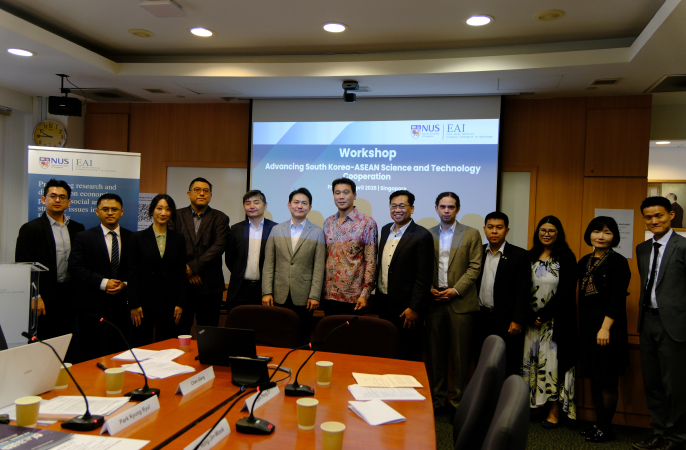 [G-CODEs] NUS EAI-Univ. Sydney-KAIST G-CODEs Workshop on "Advancing South Korea-ASEAN Science and Technology Cooperation"
On April 24, 2026, researchers and academics gathered in Singapore for the Workshop on "Advancing South Korea-ASEAN Science and Technology Cooperation". Jointly organized by the East Asian Institute (EAI) at National University of Singapore, the University of Sydney, and KAIST G-CODEs, the workshop brought together experts from both regions to discuss the current state, challenges, and future directions of South Korea-ASEAN S&T cooperation. "In unity, there is resilience." H.E. HONG Jin-Wook, Ambassador of the Republic of Korea to Singapore The workshop opened with a congratulatory speech by H.E. HONG Jin-Wook, Ambassador of the Republic of Korea to Singapore, who underscored the diplomatic significance of Korea-ASEAN S&T cooperation in the current geopolitical context. His message symbolized the potential for meaningful collaboration between South Korea and ASEAN amid intensifying US-China strategic competition. The workshop consisted of four panels addressing the full breadth of the Korea-ASEAN S&T agenda. Experts from ASEAN nations including Singapore, Indonesia, the Philippines, Thailand, and Malaysia including 20 scholars and policy researchers gathered to present and discuss key issues. In the first session, Prof. Kyung Ryul Park (KAIST STP / Director, G-CODEs) presented on "Mapping Technology Cooperation Networks", introducing Korea's latest AI governance policies and initiatives, including the implementation of Korea's AI Basic Act (2016) and the 2026 national AI budget. He also chaired Panel 3 on Critical Technology Sectors, leading key discussions. Ms. Seohee Yoon (Ph.D. Student, KAIST STP) also presented on "Decades of Science & Technology Collaboration: A Bibliometric Analysis of Science and Technology Co-authorship between Republic of Korea and ASEAN" during the first sesion. Through a ten-year analysis of academic collaboration between the two regions, she mapped cooperation patterns and proposed effective frameworks for science and technology partnership, clearly identifying strengths and areas for improvement in regional cooperation. The workshop featured in-depth discussions across various critical technology domains and policy areas, with participants sharing concrete cooperation cases in nuclear energy, quantum technologies, and electric vehicles and batteries. These discussions demonstrated the direction South Korea-ASEAN S&T cooperation should pursue in the future. Major Discussion Areas: 1. Technology Trade and Research Networks • Analysis of international cooperation structures in semiconductors, AI, and quantum technologies 2. Energy Security • Cooperation in nuclear power, renewable energy, and EV battery technologies 3. Emerging Technology Governance • Responsible development and international cooperation frameworks for AI and quantum technologies 4. Defense Industry Cooperation • South Korea's defense export strategies and alignment with ASEAN countries' needs 5. Policy and Institutions • Analysis of institutional gaps between South Korean and ASEAN countries in S&T policy 6. Capacity Building and Human Resource Development • Strategies for enhancing ASEAN countries' technological absorption capabilities The outcomes of this workshop will be compiled into an edited volume and publisehd later this year, with a title of "Advancing South Korea-ASEAN Science and Technology Cooperation", co-edited by Prof. Justin Hastings (University of Sydney) and Prof. Kyung Ryul Park (KAIST G-CODEs).
2026.04.24.
-
Events
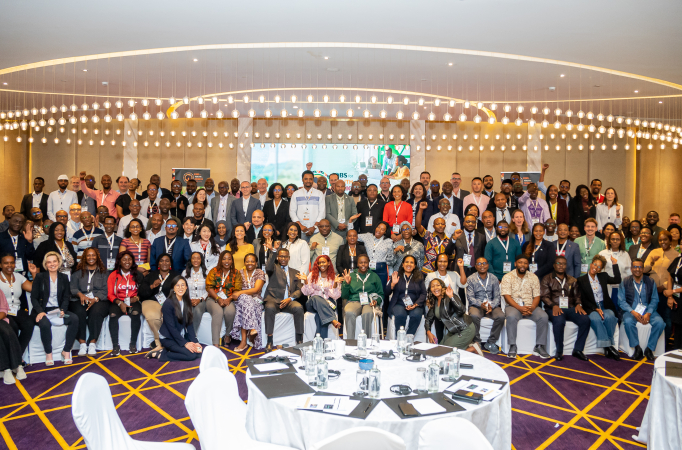 [G-CODEs] KAIST G-CODEs Hosts “Jobs for Youth in Africa Knowledge Exchange” with the World Bank and African Union
The Global Center for Development and Strategy (G-CODEs) at KAIST co-hosted the “Jobs for Youth in Africa Knowledge Exchange” in Nairobi, Kenya, from March 3 to 5, 2026 (local time), in collaboration with the Government of Kenya, the World Bank Group, and the African Union. The event served as a policy dialogue platform to address youth employment challenges in Africa, bringing together approximately 200 participants, including government officials from more than 20 African countries, representatives from international organizations, private sector leaders, academics, and development partners. Africa is expected to see its youth population double by 2050, while many countries continue to face high youth unemployment and widespread informal employment. The event marked the second in-person meeting of the Jobs for Youth in Africa Community of Practice (CoP), which was launched in Kigali, Rwanda in 2025. The workshop aimed to facilitate the sharing of policy experiences among member countries and to explore scalable models for youth employment initiatives. During the opening ceremony, Salim Mvurya, Cabinet Secretary for Youth Affairs, Creative Economy and Sports of Kenya, highlighted the critical importance of creating sustainable employment opportunities for young people. The workshop featured discussions and field-based learning centered on the following key themes: • Evidence-based youth employment strategies • Innovation in employment systems through digital technologies and artificial intelligence • Improving labor market outcomes through Recognition of Prior Learning (RPL) • Strengthening value chains and improving the business environment • Field visits to youth employment programs implemented by the Government of Kenya and the World Bank Professor Kyung-Ryul Park shared Korea’s experience in digital transformation and the application of artificial intelligence during the session on “Innovation in Employment Systems through Digital and AI Technologies”. Professor Gayoung Park facilitated a Global Café session, where participants exchanged experiences and insights on youth employment projects across countries. The event served as an important opportunity to strengthen international collaboration and implementation capacity for youth employment policies across Africa. A follow-up workshop is expected to take place early next year at the Kenya Advanced Institute of Science and Technology (Kenya-AIST) located in Konza Technopolis.
2026.03.06.
-
Press [Opinion] Pendulum (Korea JoongAng Daily, 2026.10.06.)
Watching the pendulum of a wall clock brings a curious sense of reassurance. Perhaps it comes from the belief that however far it swings, it will eventually return to the center. A pendulum’s motion is an honest exchange of potential and kinetic energy. It descends carrying all the energy stored as it rises, then climbs just as high on the opposite side. In 1583, at Pisa Cathedral, 19-year-old Galileo is said to have measured the period of a swinging ceiling lamp against his pulse. Whether the swing was wide or narrow, each round trip seemed to take the same time. This is the isochronism of the pendulum, which later became the basis of the pendulum clock. But there is a condition. It holds only when the angle of motion is small. As the amplitude increases, the period grows longer. In a pendulum swinging violently, I see our society. The farther it travels toward one side, the farther it swings toward the opposite extreme. Extremism on one side invariably becomes the justification for extremism on the other, making the next swing wider. Recovery takes longer, and all of us hanging from the pendulum pay the price. There is also a critical point that must not be crossed. Once the pendulum goes over the top, it loses its balance and spins in one direction. Just as a clock cannot measure time with a pendulum that never returns, a society thrown off its orbit cannot move toward the future. Embedding science and technology in Korea’s Constitution What, then, can reduce a dangerously widening amplitude? Friction. It is the kind of thing we usually find bothersome, like air resistance or stiffness at the pivot. In society, it means tedious dialogue and compromise, principles that withstand discomfort and tolerance of others. Only by enduring that arduous process, and refusing to lose sight of the center even while swinging, can our social clock recover its proper rhythm. I look again at the wall clock. Perhaps what Galileo noticed in the lamp was not the swing but the return. The clock’s hands move forward not because the pendulum surges violently to one side, but because it unfailingly descends and passes through its lowest point. The most powerful force moving the world, too, is not the pull toward opposing extremes, but the steady restoring force that insists on finding the center again. A healthy society does not stop swinging altogether. It keeps moving, but within shared bounds that allow disagreement without destroying the common center. What, then, can reduce a dangerously widening amplitude? Friction. It is the kind of thing we usually find bothersome, like air resistance or stiffness at the pivot. In society, it means tedious dialogue and compromise, principles that withstand discomfort and tolerance of others. Only by enduring that arduous process, and refusing to lose sight of the center even while swinging, can our social clock recover its proper rhythm. I look again at the wall clock. Perhaps what Galileo noticed in the lamp was not the swing but the return. The clock’s hands move forward not because the pendulum surges violently to one side, but because it unfailingly descends and passes through its lowest point. The most powerful force moving the world, too, is not the pull toward opposing extremes, but the steady restoring force that insists on finding the center again. A healthy society does not stop swinging altogether. It keeps moving, but within shared bounds that allow disagreement without destroying the common center. Go to the original article
2026.10.06.
-
Press [News] Seeking Ways to Use AI for Inclusive and Sustainable Development Cooperation (KOREA.net, 2026.09.23.)
- MOFA and KOICA co-hosted the 19th Seoul ODA International Conference in conjunction with the first Korea–Central Asia Summit - [Related National Policy Task] No. 120: Emerging as a G7+ Diplomatic Power through Contributions and Active Engagement in the International Community The Ministry of Foreign Affairs (MOFA) and the Korea International Cooperation Agency (KOICA) jointly hosted the 19th Seoul ODA (Official Development Assistance)* International Conference at the Conrad Seoul Hotel in Yeouido on September 18 (Friday). The Seoul ODA International Conference is Korea's largest annual conference on ODA. This year's conference, themed "Artificial Intelligence (AI) for Inclusive and Sustainable Development," brought together representatives from the development cooperation community including governments, international organizations, academia and industry at home and abroad. * Official Development Assistance (ODA) is aid provided by government and other public institutions for developing countries to help them promote economic development and social welfare. Participants agreed that fully realizing diverse opportunities AI brings to development cooperation requires careful consideration of each country's differing digital infrastructure as well as its human and institutional conditions. Their discussions focused on how to tailor the use of AI to the circumstances and needs of partner countries and ensure that technology gaps do not cause wider inequality. In her welcoming remarks, Vice Minister of Foreign Affairs Kim Jina said that while AI is creating new opportunities for productivity, innovation and development, existing gaps could widen further if its benefits are not shared broadly. She stressed that the task of development cooperation is not simply to expand access to technology but to help each partner country build the capacity and sense of ownership needed to use and advance AI in line with its own circumstances. She added that Korea would continue to work as a responsible partner so that “no one is left behind in the age of AI." In his opening remarks, KOICA Acting President Kim Dong-ho said the conference would serve as an opportunity to move beyond conceptual discussions of development cooperation in the AI era and for businesses, civil society and partner-country governments to jointly explore concrete courses of action. In his keynote address, Dr. Landry Signé, Senior Fellow at the Brookings Institution, argued that developing countries should become co-creators of the AI transition rather than mere consumers of technology, and called for an inclusive AI governance and new partnerships to make this possible. The first session on "Designing Development Cooperation in the AI Era" examined the foundations and principles needed to advance AI-related development cooperation. Director-General for Development Cooperation at MOFA Lee Kyooho introduced the Korean government's strategy for grant assistance related AI and science and technology, while head at the International Telecommunication Union (ITU) Hani Eskandar and KAIST Professor Park Kyung Ryul, who studies sustainable development and global technology governance, shared perspectives on building AI infrastructure and on inclusive AI governance, respectively. Participants noted that, in the AI era, it is important to expand not only internet connectivity but also cloud computing, data and digital public infrastructure, alongside talent development. They also stressed the need to design AI with attention to partner countries' own languages, data and institutions, and to ensure that partner countries take part from the design stage onward as capable participants rather than remaining mere beneficiaries. The second session on "AI Development Cooperation in the Field" showcased real-world examples of AI applications in development cooperation. 60Hertz, a company participating in KOICA's corporate partnership program, presented its use of IT solutions and virtual power plant (VPP) technology to expand the distribution of renewable energy in Vietnam. Wadhwani AI introduced its mobile AI applications in India's healthcare sector, and Norway's development cooperation agency, Norad, shared its experience of using AI to automate aid administration and support data-driven decision-making. The third session was organized as a special session to deepen AI-related ODA cooperation with five Central Asian countries, building on the outcomes of the first Korea–Central Asia Summit held on September 16. Under the theme "A Strategic Partnership for Korea–Central Asia AI ODA," officials from KOICA, the World Bank, the Asian Development Bank (ADB) and the government of Tajikistan shared the progress in AI and digital cooperation under way in Central Asia, while government representatives from Uzbekistan, Kyrgyzstan, Tajikistan, Kazakhstan and Turkmenistan exchanged views on future cooperation in a panel discussion. Participants emphasized that, given the differing levels of digital development, infrastructure and human resources across Central Asian countries, cooperation should reflect each country's own strategy and needs rather than pursue uniform technology transfer. They also identified AI talent development, expanded computing infrastructure, and the development of technologies based on local languages as key areas for future cooperation. MOFA and KOICA plan to actively incorporate the outcome of the discussions held at this conference into their future Korea–Central Asia AI ODA initiatives. As a side event, a "KOICA AI Partners Fair" was held, featuring ten Korean AI companies* that presented AI and digital technologies spanning education, healthcare, energy, agriculture and other fields. The fair gave Korean companies an opportunity to explore entry into the development cooperation market and to network with overseas partners.* DataMaker, TagHive, weplat, AIWorks, Visang Education, 60Hertz, LiveCare, Medisapiens, Pipetree, AIMD Amid growing calls for international cooperation to narrow the AI gap between nations and to harness AI for the sustainable development of developing countries during this period of digital and AI transformation, MOFA designated AI as a priority ODA area and established its "Grant-based AI ODA Strategy" in July of this year. Building on the results of the discussions held at this conference, MOFA and KOICA plan to continue advancing inclusive and sustainable AI development cooperation together. Go to the original article
2026.09.23.
-
Press [News] Rainer, KAIST to jointly develop AI for policy research, build knowledge graph and simulations (Digital Today, 2026.09.22.)
Park Kyung-ryul (박경렬), a KAIST professor, and Kang Jung-gu (강정구), head of AI strategy at Rainer, pose for a photo at a research cooperation signing ceremony at KAIST's Research Center for Science, Technology and Global Development (G-CODEs) on Sept. 21. [Photo: Rainer] Global AI agent startup Rainer will develop AI technology specialised for policy research with the Korea Advanced Institute of Science and Technology (KAIST). Rainer said on Sept. 22 it has signed a memorandum of understanding with di-Lab (Digital Innovation and International Development Lab), led by Park Kyung-ryul (박경렬), a professor at KAIST's Graduate School of Science and Technology Policy, to cooperate on research in the field of policy-research AI. The two sides will jointly develop a knowledge graph and AI agents specialised for international development and science and technology policy using Rainer's academic research AI agent, Rainer Scholar. They will also empirically analyse the effects of AI on policy research productivity and access to knowledge. Rainer will be responsible for AI agent technology and system development. di-Lab will provide expertise in international development and science and technology policy, set the context for application, and handle verification and academic research. di-Lab researchers will use Rainer Scholar across the full research process, from data gathering to policy analysis and paper writing. They will also build a domain knowledge graph that structures entities and relationships such as institutions, projects, policies and funding in international development and science and technology policy. The partners will jointly develop an AI agent to verify whether each piece of information is based on the original source. The partners also plan to build a policy simulation environment that can predict and review in advance the ripple effects of policy interventions by implementing various stakeholders as AI agents, including donor agencies, recipient-country governments and on-the-ground implementing organisations. They plan to expand cooperation through the build-out. Park said, "Through research cooperation with Rainer, we aim to build a research environment that precisely predicts and analyses the ripple effects of global technological change and connect it to the creation of public value." Kang Jung-gu (강정구), head of AI strategy at Rainer, said, "By combining Rainer's AI capabilities with di-Lab's domain expertise, we will raise productivity in policy research and build a precedent for closing the global knowledge gap." Go to the original article
2026.09.22.
-
Press [News] TCS hosted 2026 Trilateral Economic Seminar in Seoul (Trilateral Cooperation Secretariat, 2026.06.30.)
On June 30, 2026, the Trilateral Cooperation Secretariat (TCS) and the Chey Institute for Advanced Studies (CHEY) jointly hosted the 2026 Trilateral Economic Seminar (TES) in Seoul, the Republic of Korea, under the theme "Advancing Greener Economies towards Sustainable Growth." The seminar brought together policymakers, economists, researchers, and business representatives from China, Japan, and the Republic of Korea to discuss regional economic developments and pathways toward sustainable growth. At the opening session, Secretary-General LEE Hee-sup and CHEY President KIM Yoosuk delivered opening remarks, highlighting the importance of trilateral cooperation in responding to growing global uncertainty, advancing regional economic integration, and promoting sustainable development. The opening session also featured the official launch of the 2026 Trilateral Economic Report (TER). WANG Haobin, Senior Economist at the ASEAN+3 Macroeconomic Research Office (AMRO), presented the report's key findings, while XU Hongda, Director of Economic Affairs at TCS, introduced its main messages, emphasizing the need for coordinated policy responses to emerging economic and structural challenges. Session I, titled "CJK Economies in Flux: Assessing Current Trajectories and the Road Ahead," examined recent macroeconomic developments in the three countries and the outlook for regional growth. Moderated by CHOI Byung-Il, the session featured presentations by BAAK SaangJoon, KIMURA Fukunari, SU Qingyi, and Allen NG, followed by a panel discussion on the major findings of the TER 2026, including the impacts of AI, trade policy developments, productivity challenges, population aging, and the green transition. Session II, titled "Advancing Greener Economies towards Sustainable Growth," explored climate change, carbon neutrality, and green economic transformation from the perspectives of CJK. Moderated by PARK Kyung Ryul, the session featured CHO Sunghun, MANAGI Shunsuke, PAN Yichen, and Hamza Ali MALIK, who discussed policy priorities, implementation challenges, and opportunities for trilateral cooperation in areas such as industrial decarbonization, clean energy, green finance, and technology cooperation. The seminar attracted around 200 registered participants from academia, industry, and related professional communities, providing a valuable platform for exchanging perspectives on regional economic developments, green transition, and the future of trilateral cooperation. ▲SG LEE delivering his remarks ▲Group photo of participants ▲Session 1 discussion ▲Session 2 discussion Go to the original article
2026.06.30.
-
Press [News] KAIST holds Global Science and Technology Cooperation Forum… Discusses sustainable international cooperation measures (KAIST News, 2026.06.11.)
KAIST announced on June 11th that the Global Center for Development and Strategy (G-CODEs) hosted the "Forum on Global Cooperation in Science and Technology: Beyond Crisis, Toward Sustainable Cooperation" at the KAIST Academic Cultural Complex on June 10th. This forum was organized to review South Korea's international cooperation strategies and execution capabilities under a rapidly changing environment for international cooperation in science and technology, driven by intensifying competition for technological hegemony, restructuring of global supply chains, and rising uncertainty in energy security. In particular, this forum was organized as a follow-up event to the 'Global Science and Technology Cooperation Forum: Reflection and Outlook' held last year. While last year's forum discussed South Korea's response strategies amid the restructuring of the global science and technology order, this year's forum continued the discussion with a focus on more specific cooperation tasks, such as execution capabilities and institutional foundations for international cooperation, fostering professional talent, international joint research, and research security. Beginning with opening remarks by Sang-wook Kang, Director General for Planning and Coordination at the Ministry of Science and ICT, the forum proceeded with a total of three sessions. In the first session, 'Restructuring Science and Technology International Cooperation in the Era of Techno-Geopolitics,' So Young Kim, Vice President of International Office at KAIST, served as the chair to discuss the direction of international cooperation in science and technology according to changes in the economic security and techno-geopolitical environment. Wonho Yeon, Director at Hyundai Motor Group, presented global cooperation strategies in the era of economic security; Eunkyo Cho, Head of Team at the Korea Institute for Industrial Economics & Trade (KIET), presented the potential for Korea-China cooperation in the era of physical AI; and Inkyoung Sun, Research Fellow at the Science and Technology Policy Institute (STEPI), presented the importance of research security for international joint research. Subsequently, Damian Bank, Professor at the Global Center for Development and Strategy (G-CODEs) at KAIST, and Chaegwon Lim, Professor at the School of Electrical Engineering at KAIST, participated in the panel discussion. In the second session, 'International Joint Research: Issues and Challenges,' Jae Yong Choung, Professor at the Graduate School of Science and Technology Policy at KAIST, served as the chair to address practical experiences and institutional challenges of international joint research. Eunseong Kim, Professor at the Department of Physics and the Graduate School of Quantum Science and Technology at KAIST, shared the experiences of the KAIST-MIT global partnership, and Dr. Hae-Jung Lee from the National Institute of Standards and Technology (NIST) in the United States presented South Korea's collaborative capabilities and areas for improvement from the perspective of an overseas partner. Seokkyun Woo, Professor at the Graduate School of Science and Technology Policy at KAIST, analyzed the current status and characteristics of international cooperation research by government-funded research institutes currently being conducted by the G-CODEs research center, and discussed directions for improving the international cooperation support system. Ju Young Kim, Policy Officer at the Delegation of the European Union to the Republic of Korea, and Hyerin Park, Center Head at the Korea Research Institute of Standards and Science (KRISS), participated in the panel discussion. In the third session, 'Fostering Talent for Science and Technology International Cooperation,' Sukyung Park, Professor at the Department of Mechanical Engineering at KAIST, served as the chair to discuss fostering professional talent and institutional foundations for international cooperation. Eun Ju Jun, Director at the Korea Atomic Energy Research Institute (KAERI), Mijung Um, Center Head at the Science and Technology Policy Institute (STEPI), Jonghoon Moon, Deputy Director at the Ministry of Science and ICT, Jin Yeob Na, Deputy Director at the Ministry of Foreign Affairs, and Eun Jung Koh, Head of Division at the Korea Institute of Human Resources Development in Science and Technology (KIRD), participated as panelists to discuss ways to foster convergence talent, capabilities and training required for practical personnel in international cooperation, career development, and establishing support systems. Kyung Ryul Park, Director of the Global Center for Development and Strategy (G-CODEs) at KAIST, said, "This forum was a venue to examine the changes and challenges surrounding international cooperation in science and technology and to seek sustainable cooperation measures. Reflecting its recently surging importance, students and participants showed high interest in nurturing future convergence talent for international cooperation in science and technology." Kwang Hyung Lee, President of KAIST, stated, "International cooperation in science and technology is an important foundation for national competitiveness and future growth. I hope this forum serves as an opportunity to seek sustainable methods for international cooperation in science and technology amid a rapidly changing global environment." (End) ※ Forum Presentation Materials: Global Center for Development and Strategy Website (https://global.kaist.ac.kr/) Forum on Global Cooperation in Science and Technology> Go to the original article
2026.06.11.
-
Press [News] KAIST Explores Solutions for African Youth Employment with World Bank and African Union (KAIST News, 2026.03.10.)
KAIST announced on the 6th that the 'Jobs for Youth in Africa Knowledge Exchange' platform was held in Nairobi, Kenya, from March 3 to 5 (local time). The event was hosted by the Kenyan government and co-organized by the World Bank Group, the African Union, and the KAIST Global Center for Development and Strategy (G-CODEs). As a high-level policy implementation platform dedicated to addressing youth employment challenges in Africa, the event drew approximately 200 participants, including government officials from over 20 African nations, international organizations, the private sector, academia, and development cooperation partners. KAIST participated as a key global partner linking technology and policy, presenting innovation models for employment systems based on digital and Artificial Intelligence (AI) technologies. < Scene from the meeting hosted by the Kenyan government > With Africa’s youth population projected to double by 2050, the continent faces significant hurdles such as high unemployment rates and informal employment. This event marked the second face-to-face meeting of the 'Jobs for Youth in Africa Community of Practice (CoP),' which was launched in Kigali, Rwanda, in 2025. The meeting aimed to share policy experiences among member states and materialize scalable implementation models. Salim Mvurya, Kenya's Cabinet Secretary for Youth Affairs, Creative Economy, and Sports, attended the opening ceremony and emphasized that youth job creation is a critical priority at both national and continental levels. The program focused on several key themes: • Evidence-based youth employment strategies • Innovation in employment systems through digital and AI technologies • Improving labor market outcomes through Recognition of Prior Learning (RPL) • Business environment reforms and strengthening value chain linkages Notably, in the session titled "Digital and AI-based Employment System Innovation," Professor Kyung Ryul Park of KAIST shared Korea’s digital transformation experiences and AI application cases, proposing directions for data-driven policy design and the development of technology-based employment platforms. Additionally, KAIST Professor Ga-young Park facilitated mutual learning and connected cases of scalable youth employment projects across countries during the "Global Cafe Session." Participants visited the project site of "National Youth Opportunities Towards Advancement (NYOTA)," an initiative pursued by the Kenyan government and the World Bank. There, they observed a comprehensive youth employment model that integrates vocational training, job matching, and entrepreneurship support. The site visit served as a practical learning opportunity to share the processes of policy design and execution. Since last year, KAIST has been involved in digital innovation projects for youth employment in East Africa through the Korea-World Bank Partnership Facility (KWPF). Through this event, the university reaffirmed its status as a global cooperation hub leading technology-based policy innovation. "The issue of youth employment is a structural challenge that combines digital transformation, industrial strategy, and educational reform," stated Professor Kyung Ryul Park. "KAIST will continue to present actionable policy models based on data and technology while strengthening international cooperation." This Knowledge Exchange platform is evaluated as a significant milestone that reaffirmed the African youth employment agenda as a core priority of international cooperation and solidified the foundation for enhancing policy implementation capabilities. A follow-up workshop is scheduled to be held early next year at the Kenya Advanced Institute of Science and Technology (Kenya-AIST) campus in Konza, Nairobi, which is modeled after KAIST. Go to the original article
2026.03.10.
-
G-Talks
 [G-CODEs Talks] From Food Aid to Self Reliance: How Zero Hunger Villages Are Transforming Climate-Vulnerable Communities in Malawi
■ Date and Time: July 9, 2026 (Thu), 14:00–15:40 ■ Venue: Yang Seungtaik Auditorium, KAIST Academic Cultural Complex (E9) ■ Speaker: Hyoung Joon Lim, WFP Malawi Country Director and Representative ■ Title: From Food Aid to Self-Reliance: How Zero Hunger Villages Are Transforming Climate-Vulnerable Communities in Malawi ■ Panelists • Hae Won C. McJeon, Professor, KAIST Graduate School of Green Growth and Sustainability • Hyungjun Kim, Professor, KAIST College of AI • Hyunyoung Ryu, Professor, KAIST MetaEarth Research Center ■ Key Presentation and Discussion Highlights: Hyoung Joon Lim, Country Director and Representative of the United Nations World Food Programme (WFP) in Malawi, introduced the realities facing rural communities in Africa, where climate change is intensifying food insecurity. He shared the experience and achievements of the Zero Hunger Village model, which seeks to move beyond repeated emergency food assistance by enabling communities to produce their own food and generate sustainable sources of income. In Guinea, the programme went beyond introducing high-yield rice varieties and agricultural technologies by linking agricultural production with school meals, nutrition support, rural infrastructure, market access, and income diversification. This integrated approach created a virtuous cycle in which increased agricultural productivity contributed to higher household incomes and improvements in children’s nutrition and education. In Malawi, WFP is similarly combining climate information and anticipatory action with agricultural inputs, technical guidance, soil and water management, finance, and market access to support the transition of residents from food-aid recipients to self-reliant producers and economic actors. The presentation highlighted that food insecurity should not be understood simply as a shortage of food or a problem of low agricultural productivity. In contexts where climate shocks such as droughts and floods recur, providing emergency relief to the same communities each year remains essential for protecting lives. Over the long term, however, this approach may place increasing pressure on governments and donors while weakening the foundations for community self-reliance. The presentation therefore emphasized the need to shift the focus of development cooperation from “how much assistance has been delivered” to “when communities can graduate from assistance.” This requires a phased pathway from increased productivity and household food security to surplus production, income generation, market participation, and ultimately self-reliance. Gradually reducing external assistance while increasing community contributions and ownership was presented as a key condition for reducing aid dependency and improving both the sustainability and scalability of development programmes. The subsequent discussion focused on how technology, field implementation, institutions, and local communities could be better connected to scale the achievements of the Zero Hunger Village model. The panelists emphasized that in climate-vulnerable countries such as Malawi, the impacts of climate change extend beyond declining agricultural production and can trigger cascading consequences for educational opportunities, household livelihoods, nutrition and health, migration, and social protection. They therefore underscored the importance of anticipatory governance, which uses early-warning systems and precise climate information to provide timely support to the communities and populations most at risk, rather than responding only after a climate crisis has occurred. The discussion also explored opportunities for research institutions such as KAIST to provide climate and environmental data and predictive technologies, while international organizations and field-based partners apply these tools to operational decision-making and programme implementation. The panelists further noted that technologies and external solutions should not be transferred in a one-directional manner. Instead, communities must be able to participate directly in programme implementation and experience tangible results. When residents contribute their own labour and resources, observe the success of neighbouring households, and take part in village-level decision-making, motivation and cooperation can spread and contribute to greater community resilience. The discussion also emphasized the need for complementary collaboration between researchers, who can objectively assess programme outcomes, and field practitioners, who can identify practical challenges that may be overlooked in academic research. Director Lim explained that WFP is expanding its cooperation with universities and research institutions and that field data-based research, programme evaluation, and the participation of students and researchers in field activities could help assess the effectiveness and scalability of the Zero Hunger Village model. Ultimately, the presentation and discussion demonstrated that food-security challenges in climate-vulnerable regions cannot be addressed by treating emergency relief and long-term development, climate adaptation and local economic development, or science and technology and community participation as separate agendas. The Zero Hunger Village model is not intended to perpetuate external assistance, but to build the capacity of communities to withstand shocks and secure their own food and income. A central takeaway was that scaling these achievements into national policy will require the financial and institutional participation of local governments, as well as long-term cooperation among international organizations, universities, and the private sector. ■ Speaker Biography: • Hyoung Joon Lim has worked with the United Nations World Food Programme (WFP) for over 20 years, leading humanitarian and development operations across four continents. • He has served in Honduras, Guinea-Bissau, Laos, WFP Headquarters in Rome, and the WFP Seoul Global Office. • From 2021 to 2025, he served as WFP Country Director in Guinea, where he launched the Zero Hunger Village programme and contributed to laying the foundation for the K-Rice Belt initiative. • He currently serves as WFP Malawi Country Director and Representative.
2026.07.09.
-
G-Talks
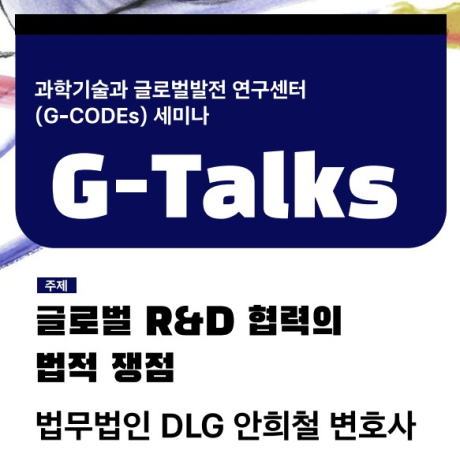 [G-CODEs Talks] Policy and Legal Analysis for Enhancing International Cooperation in Science and Technology
Event Details Date: August 13, 2025 Speaker: Mr. Hee Chul Ahn, Managing Partner & Head of Policy Center, DLG Law Group Title: Policy and Legal Analysis for Enhancing International Cooperation in Science and Technology Summary of Presentation and Discussion In this G-Talks session, Attorney Hee Chul Ahn emphasized the growing importance of science and technology diplomacy and analyzed the limitations of Korea's current legal and institutional framework governing international S&T (Science and Technology) cooperation. He presented a detailed legal review of existing statutes and regulations related to international cooperation in science and technology, noting critical gaps that have emerged following the repeal of the "Regulation on the Management of National R&D Projects" and the enforcement of the new "National R&D Innovation Act". Mr. Ahn pointed out that the new legislation has led to the disappearance of key provisions concerning international collaboration in science and technology. To address this legal vacuum, he proposed the enactment of a "Framework Act on International Science and Technology Cooperation" and discussed the specific components such legislation should include. He also introduced comparative examples from the United States, the European Union, and Japan, analyzing their legal and policy frameworks for international S&T cooperation. Finally, he referred to emerging global initiatives such as the AI Action Plan, drawing policy implications for Korea's future legal reforms and international collaboration strategies. Speaker Biography Mr. Hee Chul Ahn is the Managing Partner and Head of the Policy Center at DLG Law Group, combining expertise in both science and technology and law. He earned his B.S. in Physics from POSTECH (Pohang University of Science and Technology) and his Juris Doctor from Seoul National University School of Law, and is qualified as both a lawyer and a tax accountant. Mr. Ahn also serves as an Adjunct Professor in the Department of Industrial and Management Engineering at POSTECH and as a Board Member of the Korea Business Angels Association. He provides legal advisory services and litigation representation in diverse areas, including startups, corporate and financial law, M&A, data protection, and artificial intelligence-related industries. Specializing in cross-border startup transactions, he leads Flip (outbound incorporation) and inbound/outbound M&A deals, and has authored Startup Legal Guide 3.0 and Investment Agreement Guidebook. He regularly advises organizations such as the Korea Business Angels Association, Korea Accelerator Association, Korea Institute of Startup & Entrepreneurship Development (KISED), and Seoul Business Agency (SBA), and lectures on M&A practices at K-M&A School.
2025.08.13.
-
G-Talks
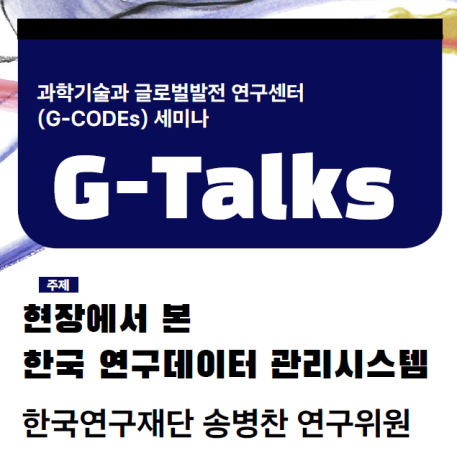 [G-CODEs Talks] Current Status and Policy Implications of the National R&D Research Data Management System
Event Details Date: August 6, 2025 Speaker: Mr. Byung Chan Song, Senior Research Fellow, National Research Foundation of Korea (NRF) Title: Current Status and Policy Implications of the National R&D Research Data Management System Summary of Presentation and Discussion Dr. Song addressed the fragmentation of Korea's national research systems as a central theme and provided an overview of the current status of the National R&D Research Data Management System from a practitioner's perspective. He reviewed key developments and discussions that have taken place to date, highlighting operational challenges revealed in the implementation process. The seminar explored the policy implications of these challenges, emphasizing that future improvements should move beyond the mere technical integration of data and systems. Instead, Dr. Song argued that effective reform requires fostering data sharing and collaboration that reflect the distinct characteristics and contexts of each research system. In closing, he summarized key issues identified in research data management and system operations, offering a comprehensive analysis of practical improvement measures and policy directions to enhance efficiency and coherence within Korea's national R&D framework.
2025.08.06.
-
G-Talks
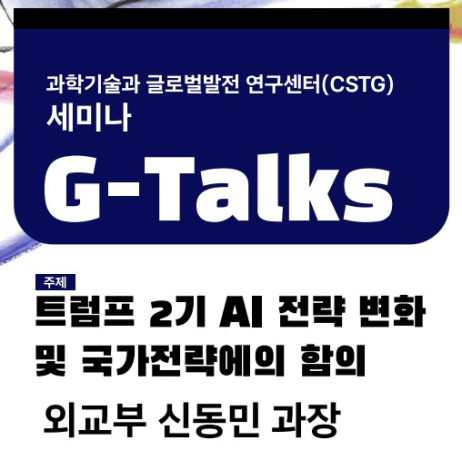 [G-CODEs Talks] The Second Trump Administration's Shifts in AI Strategy and Their Implications for National Policy
Event Details Date: May 14, 2025 Speaker: Mr. Dongmin Shin, Director, Office of International AI Diplomacy, Ministry of Foreign Affairs (MOFA), Republic of Korea Title: The Second Trump Administration's Shifts in AI Strategy and Their Implications for National Policy Summary of Presentation and Discussion Mr. Dong Min Shin provided an overview of the evolving landscape of international politics surrounding science, technology, and AI diplomacy amid intensified geopolitical competition. He discussed science, technology, and AI diplomacy amidst the international political climate, where issues such as strengthening the US-led Indo-Pacific alliance, regulation of the AI and semiconductor supply chain, and AI governance, ethics, and safety are highlighted on major international platforms. The lecture examined the innovation and supply-chain control policies of the United States, China, and Europe, as well as emerging approaches to responsible AI development. Mr. Shin discussed Korea's strategic priorities—enhancing national capacities in data, computing, AI application, strengthening Korea-U.S. and trilateral (Korea-U.S.-Japan) cooperation, and exploring strategies for Sovereign AI. The session also addressed the U.S. stance on SDG governance, the maturation of AI agendas within multilateral settings, and the need to reinforce Korea's science-and-technology diplomacy framework to remain globally competitive. Speaker Biography Mr. Shin currently serves as Director of the Office of International AI Diplomacy at the Ministry of Foreign Affairs of the Republic of Korea. Since joining the Ministry in 2008, he has held diverse diplomatic postings, including: - Korean Peninsula Peace Negotiations Division (2014 – 2016) - Permanent Mission of Korea to Vienna (2016 – 2018) - Embassy of Korea in Zimbabwe (2018 – 2020) - Consulate General in Honolulu (2022 – 2024) - Deputy Head of the Preparatory Team for the UN Plastics Treaty (2024 – 2025) Mr. Shin holds a B.A. (2005) and M.A. (2010) in International Relations from Seoul National University, and earned his Ph.D. (2015) in War Studies from King's College London.
2025.05.14.
-
G-Talks
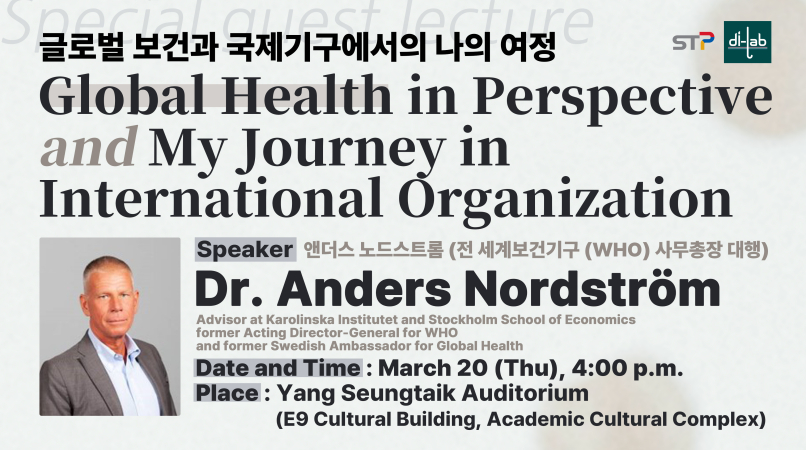 [G-CODEs Talks] Global Health in Perspective and My Journey in International Organizations
Event Details Date: March 20, 2025 Venue: Yang Seung-Taek Auditorium, KAIST Main Campus Speaker: Dr. Anders Nordström, Former Acting Director-General, World Health Organization (WHO) Title: Global Health in Perspective and My Journey in International Organizations Summary of Presentation and Discussion Dr. Anders Nordström presented a comprehensive perspective on global health issues and the ways to strengthen collective responses. In his keynote lecture, he explored the historical evolution of health and disease, climate change, the role of policy measures, and the importance of international cooperation to achieve the Sustainable Development Goals (SDGs). Following the presentation, an engaging dialogue with KAIST students took place, marked by lively discussion and active participation that further enriched the seminar. Speaker Biography Dr. Anders Nordström currently serves as a member of the advisory boards for the Karolinska Institutet (KI) and the Stockholm School of Economics (SSE). Dr. Nordström has held several key leadership positions at the World Health Organization (WHO), including: - Acting Director-General (2006 – 2007) - Assistant Director-General for General Management (2003 – 2006) - Assistant Director-General for Health Systems and Services (2007) - WHO Representative to Sierra Leone (2015 – 2017) In Sweden, Dr. Anders Nordström has held several senior leadership positions, including: - Ambassador for Global Health - Director-General of the Swedish International Development Cooperation Agency (Sida, 2007–2010) He later served as Head of the Secretariat of the Independent Panel for Pandemic Preparedness and Response (2020–2021), leading global efforts to evaluate and strengthen pandemic response mechanisms. As Acting Director-General of WHO, Dr. Nordström oversaw the legal establishment of the Global Fund to Fight AIDS, Tuberculosis and Malaria (2002). He has since served on the boards of the Global Fund, GAVI, UNAIDS, and the Partnership for Maternal, Newborn & Child Health (PMNCH), and has chaired numerous international task forces and policy processes. Dr. Nordström currently serves on the following boards and advisory councils: - Alliance for Health Systems Research - SUN–Lancet PRIME Commission - International Vaccine Institute (IVI) Global Expert Advisory Group - Virchow Foundation for Global Health Council
2025.03.20.
-
G-Talks
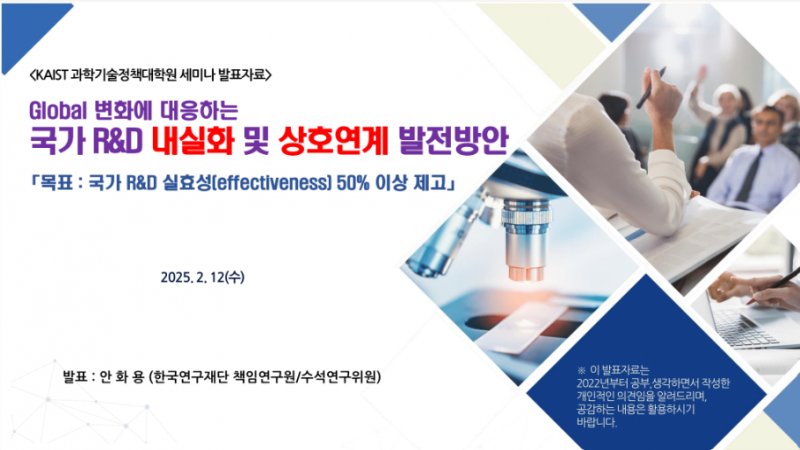 [G-CODEs Talks] Strategies for Strengthening National R&D and Enhancing Interconnectivity in Response to Global Change
Event Details Date: February 12, 2025 Speaker: Dr. Hwa Yong Ahn, Senior Research Fellow, National Research Foundation of Korea (NRF) Title: Strategies for Strengthening National R&D and Enhancing Interconnectivity in Response to Global Change Summary of Presentation and Discussion Dr. Hwa Yong Ahn presented policy directions and practical strategies to strengthen the national R&D system of Korea. At the macro level, he emphasized: - Reinforcing collaboration among academia, research institutes, industry, government, and the military - Redefining the national R&D coordination framework - Establishing an integrated five-year plan that aligns economic, industrial, and R&D policies At the micro-level, Dr. Ahn proposed: - Reforming the Project-Based System (PBS) to foster research concentration - Simplifying project management and evaluation procedures to improve efficiency - Promoting technology commercialization - Expanding mid- to long-term international cooperation and global talent attraction Discussions also covered administrative and evaluative reforms, including: - Reducing overlapping evaluations across government-funded research institutes - Improving policies that take into account the Technology Readiness Levels (TRLs) - Transitioning R&D expenditure regulations toward a "negative list" approach Finally, the seminar highlighted the need to reorient R&D policy toward pragmatism and greater contribution to export-driven industries as key directions for national innovation. Speaker Biography Dr. Hwa Yong Ahn currently serves as Senior Research Fellow in the Policy Research Division at the National Research Foundation of Korea (NRF). He previously held several leadership positions, including Director of Policy Research, Director of Planning and Coordination, and Director-General for International Cooperation at NRF. Dr. Ahn has served as: - Visiting Research Fellow, George Washington University (2008) - Policy Advisor, Daejeon Technopark (2023) - Visiting Research Fellow, National Policy Research Institute, Chungnam National University (2024) - Member, Research System Innovation Planning Committee, Ministry of Science and ICT (2017–2018) - Member, R&D Policy Advisory Committee (2020) - Expert Member, Presidential Advisory Council on Science and Technology (2020) He has received multiple national honors, including commendations from the Minister of Science and Technology (2001), the Minister of Strategy and Finance (2001), and a Presidential Citation (2007) for his contributions to Korea's science and technology policy development.
2025.02.12.
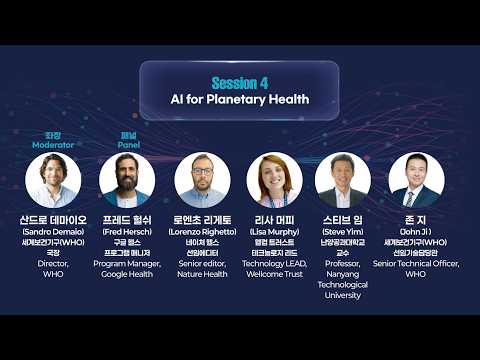
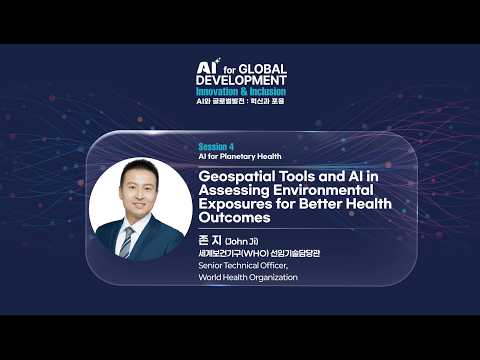
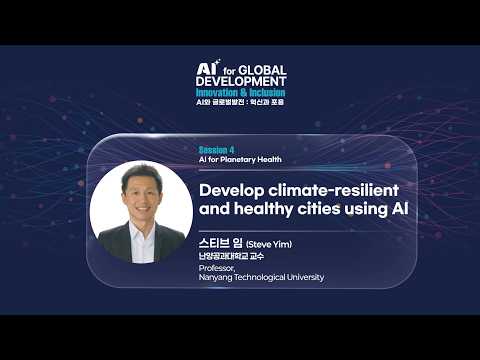
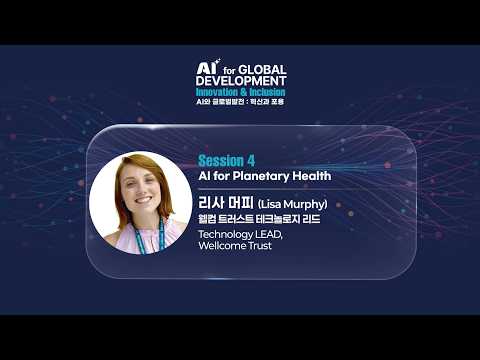
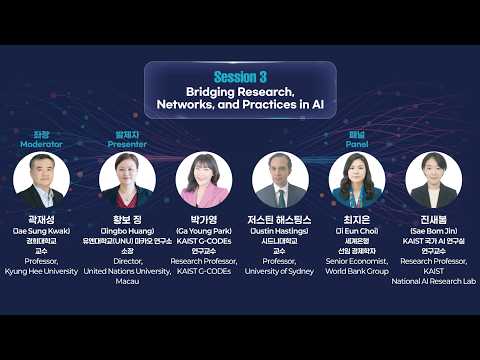
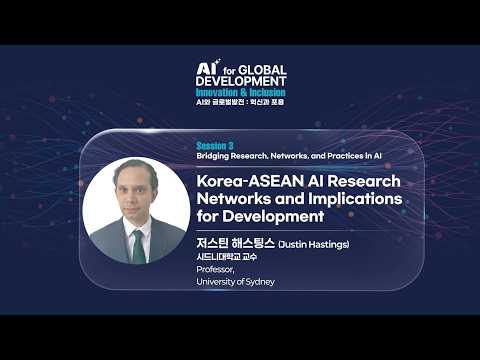
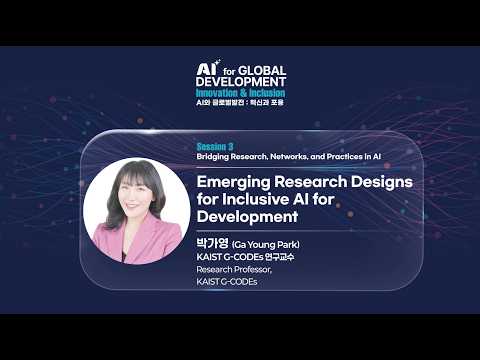


People
People
-

Center Director
Kyung Ryul Park- Global Technology Governance
- Sustainable Development
- National Development Strategy
- AI Governance

Research Professor
Gayoung Park- Digital for Development (D4D)
- African Innovation Ecosystems
- ICT Policy
- Women’s Empowerment
- Technology Commercialization
- Trustworthy AI
- AI Design
- Human–AI Interaction
- Data Governance
- Innovation Strategy

Research Professor
Damian Bank- International Cooperation
- Science and Technology Studies
- Human Rights
- Digital Governance
- Human-centered AI

KAIST Graduate School of Science and Technology Policy
So Young Kim- R&D Policy
- S&T Workforce Policy
- Basic/big Science Policy
- Emerging Technology Governance
- S&T ODA

KAIST College of AI
Hyung Jun Kim- Climate Change
- Global Hydrology

KAIST Graduate School of Green Growth and Sustainability
Jiyong Eom- Energy & Environmental Economics and Policy
- Climate Financial Risk Assessment and Management
- Integrated Assessment for Climate and Technology Policy Analyses
- Demand-side Solutions for Energy and Climate

KAIST Graduate School of Science and Technology Policy
Seokkyun Woo- Science and Technology Policy
- Science of Science
- Organization of Science and Innovation
- Computational Social Science

KAIST Moon Soul Graduate School of Future Strategy
Tae Jung Park- International Law
- International Economic Law and International Environmental Law
- Law and Development
- Law and Economics
- AI Governance

KAIST School of Business and Technology Management
Narae Lee- Non-market Strategy
- Sustainability
- Climate Change

KAIST Department of Civil and Environmental Engineering
Soh Young In- Sustainable Finance
- Climate Risk Analysis
- Infrastructure Development & Investment
- Project Management
- Carbon Market

KAIST School of Business and Technology Management
Seokbeom Kwon- Funding Policy
- Science of Science
- Research Data Policy
- Patent Strategy
- Innovation and Competition
- Economics of Science
- Emerging Technology
- AI and Innovation

KAIST School of Digital Humanities and Computational Social Sciences
Taegyoon Kim- Political Behavior
- Political Communication
- Digital Politics
- Science and Politics
- Computational Social Science

Max Planck Institute
Meeyoung Cha- Artificial Intelligence & Information Services
- Social Computing
- Interactive Computing

KAIST Department of Industrial and Systems Engineering
Woonam Hwang- Operations Management
- Supply Chain Management
- Healthcare
- ESG
- Sustainability
KAIST Department of Mechanical Engineering
Sukyung Park- Biomechanics
- Gait analysis
- Wearables
- IMU
- AI
KAIST School of Computing
Juho Kim- Human-AI Interaction
- Human-Computer Interaction
- Interaction-Centric AI
- AI-powered Interactive Systems
- Human Capacity Building

KAIST MetaEarth Research Center
Hyunyoung Ryu- Sustainable Development
- Data Science
- Decision Support Systems
- Urban Sustainability
- International Cooperation

Experts
Soyoun Lee- Biotechnology
- Research Administration

Experts
Eunah Cheong- International Development Cooperation
- ODA Policy
- Science, Technology and Development
- LAC Region
Experts
Sungwon Park- Social Computing,
- AI for Good,
- Responsible AI,
- AI Governance
more -
 Seohee Yoon
- Science & Technology Innovation
- ICT ODA
- International Development Cooperation
- R&D Cooperation
 Jiyeon Lee
- Technological Advancement
- Data Governance
- Global Health Security
- International Cooperation
 Seung Hyun Kim
- Technology Sovereignty
- International Development Cooperation
 Seohyeon Park
- Science of Science
- S&T Organizations and Human Resources
- S&T Governance
- public understanding of S&T
 Junho Kwon
- Science Diplomacy
- Nuclear Power
 Hyo Rim Ryu
- Technological Sovereignty
- Science & Technology Diplomacy
- Advanced Biotechnology
- Synthetic Biology
 Doah Kwak
- Idea Diffusion
- Science of Science
- Network Analysis
- Artificial Intelligence
 Minjae Kim
- Machine Learning
- Natural Language Processing (NLP)
- Climate Change
 Hayoon Song
- Climate Risk Analysis
- Sustainable Finance
- Just Energy Transition
- Climate Policy
- Community Acceptance
more -
Affiliates

There's no data yet.
more
vision
A convergent research platform that designs a better global future through the integration of science, technology policy, and international cooperation.
-

Innovation of National R&D Governance
-

Strategy for Leading Science and Technology Cooperation
-

Science and Technology-Based International Development Cooperation
-

Joint Response to Global Challenges
Global Center for Development and Strategy Global Center for Development and Strategy